Here's what nobody tells you about menopause and pleasure
Your clitoris didn't go anywhere. Your nerves didn't vanish. Your brain's reward system is still fully operational. What actually changes is tissue thickness, lubrication speed, and how quickly arousal builds. That's real, it's worth understanding, and it's completely workable.
I work with couples and individuals navigating this transition constantly. The pattern I see most? People assume the problem is desire when it's actually friction, speed of arousal, or just using the same approach their body needed ten years ago. A lemon clitoral vibrator, especially one that uses suction instead of traditional vibration alone, often shifts everything.
What happens hormonally and why it matters for sensation
Estrogen drops sharply. Testosterone declines too (people with ovaries produce it, and it's central to desire and arousal speed). These shifts change vulval tissue from thicker and naturally more elastic to thinner and drier. Blood flow to the clitoris becomes slower to build. The pelvic floor loses some of its estrogen support, which can change how orgasms feel.
Here's what's crucial: none of this stops the clitoris from working. It just changes the access route.
Think of it like this. Before menopause, your body might have been a sports car. High fuel efficiency, responsive, quick ignition. Postmenopause, it's more like a luxury sedan. It needs a longer warm-up. It operates best at a different speed. But it still goes places beautifully.
Many of my clients report that their most intense orgasms happen after menopause. This is not reassurance fluff. It's clinically consistent. Why? Less distraction, more permission, and often better tools.
Why clitoral suction works better than vibration alone after menopause
Traditional vibrators rely on direct mechanical stimulation. That works great when tissue is thicker and can tolerate more intensity. Postmenopause, thinner tissue becomes sensitive to friction. You might feel buzzing rather than pleasure. You might need to start at intensity level 1 instead of level 5.
Clitoral suction, like the Lem by Hello Nancy, works through a completely different mechanism. Instead of vibrating against tissue, it creates a gentle seal and pulsing sensation that mimics oral sex. This stimulates nerve endings without direct friction. The result? You get more sensation with less mechanical pressure.
For postmenopausal bodies, this matters. A lot. You're not fighting tissue sensitivity. You're working with what your body has right now.
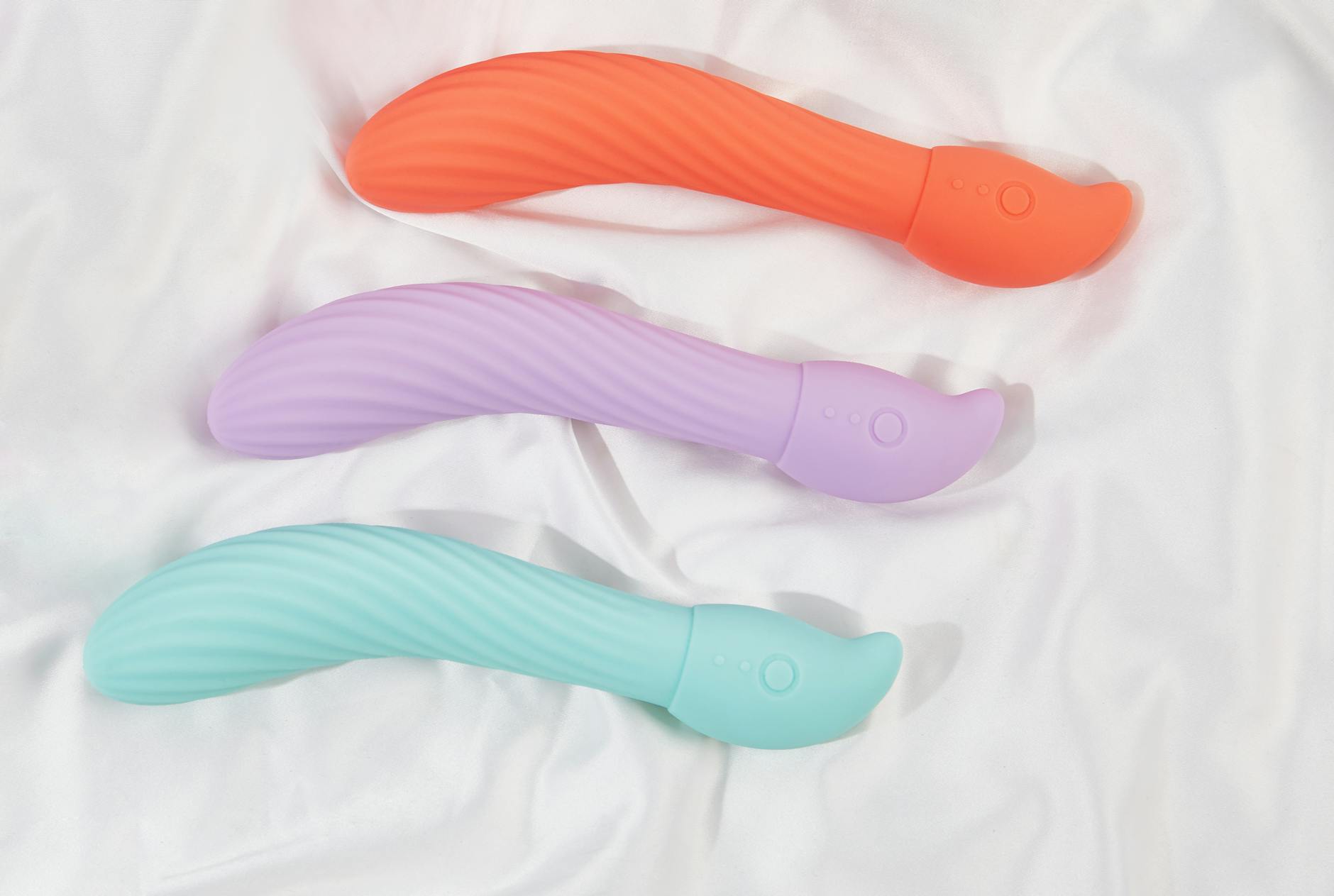
Photo by IFONNX Toys on Pexels
The physical adjustments that actually make a difference
Four things change the experience dramatically:
Lubrication is non-negotiable. I don't say this to imply you're broken. I say it because thinner tissue benefits from it, and because using a lemon suction toy with water-based lube creates a better seal anyway. Silicone-based lubes are richer but can degrade silicone toys. Stick to water-based.
Extend your warm-up window. Arousal takes longer to build. Budget 15 to 25 minutes instead of five. Use this time for touch, for mental foreplay, for reconnecting with what turns you on now. This is not lost time. This is the new baseline.
Start at lower settings. The Lem has ten intensity levels. After menopause, you're not weak or broken for starting at level one or two. You're meeting your body where it is. You can build up. You might also find that level three or four is your sweet spot now, and that's fine too.
Learn to release your pelvic floor. Pelvic floor tension often increases as estrogen drops. Kegels are useful, but so is the opposite. Spend time learning to fully relax your pelvic floor. A physical therapist specializing in pelvic health can teach you this in a few sessions.
The emotional and relational dimensions
Menopause often collides with other life shifts. Kids launching, career changes, relationship renegotiations, grief. It's easy to confuse a shift in sexual sensation with a loss of desire or connection. They're different conversations.
If you're partnered, separating these helps both of you. "My body is responding differently to stimulation" is information. "I want us to reconnect" is a different ask. Treating them as one problem creates frustration for both people. Treating them separately means you can actually solve them.
One thing I always emphasize: this is not a performance problem. You're not failing. Your body is changing, which is completely normal. A partner worth your time will be curious about this shift, not resentful.
When tissue changes become genitourinary syndrome of menopause
If you're experiencing pain during penetration or external stimulation, get assessed. Genitourinary syndrome of menopause (GSM) is common, real, and highly treatable. Topical estrogen creams applied locally work quickly, often within weeks, with minimal systemic absorption.
A menopause-trained gynecologist can also discuss vaginal moisturizers (for daily hydration) versus lubricants (for during sex). Many people benefit from both.
If desire has completely flatlined and isn't returning with time or therapy, testosterone therapy is worth discussing with a provider. It's prescribed more conservatively in some countries than others, but it's available and genuinely transformative for the right person.
How to reintroduce sensation and pleasure after dormancy
If you've taken a break from sex or solo pleasure, restarting doesn't require forcing it. Begin with exploration, not performance.
Spend time with the lemon clitoral vibrator at low settings with no pressure to orgasm. Notice what feels good. Notice what doesn't. Your body's preferences may have shifted. That's data, not failure.
Some people find that how to use a lemon vibrator when anxiety gets in the way covers helpful grounding techniques if mental space feels crowded. Others benefit from how to use a lemon vibrator after a break from sex as a broader roadmap.
The suction sensation of a lemon vibrator often feels less clinical and more sensual than traditional vibration, which helps people ease back in without feeling like they're using a medical device.
Timing and frequency after menopause
After menopause, your body has stopped cycling hormonally. This is honestly liberating. You don't have windows of high desire followed by windows of nothing. You have a steadier baseline.
That baseline might be lower than it was at 30, or it might be the same. Individual variation is huge. What matters is finding your rhythm now, not comparing yourself to your past.
Many people find that solo pleasure once or twice a week keeps sensation responsive. Regular blood flow to the area supports tissue health. This is not just nice for pleasure. It's restorative.
Common worries after menopause, addressed
Is my body broken? No. It's different, which feels destabilizing. But different is not broken.
Will I ever orgasm easily again? Many people find they do, just through a different route. Suction-based stimulation often gets there faster and more reliably than vibration alone.
Does my partner need to know I need more time? If you're partnered and want shared sex, yes. "I need a longer warm-up now" is useful information. "I want to explore what feels good in my body right now" is an invitation, not a complaint.
Can I use the same lemon clitoral vibrator I used before menopause? Absolutely. But you might find you're using it differently. Lower settings. Different patterns. More lube. That's not a failure. That's adaptation.
FAQ
Why does menopause make clitoral stimulation feel different?
Estrogen keeps tissue thick, elastic, and well-supplied with blood. When estrogen drops, tissue thins and blood flow becomes slower to build. This means the same intensity you used before menopause might feel harsh now. Adjusting settings, using more lube, and allowing longer warm-up time recreates the sensation without the pain.
Is it normal for orgasms to feel different after menopause?
Completely normal. Many people describe them as deeper, more concentrated, or more localized. Some feel shallower at first, then find that with exploration and the right tool, they become more intense. The nerve density hasn't changed. The pathway has shifted.
Can a lemon suction vibrator help if penetration has become uncomfortable?
Yes. Suction-based clitoral stimulation requires no penetration. You're stimulating the clitoris externally, which sidesteps vaginal discomfort entirely. This makes lemon clitoral vibrators particularly helpful during the postmenopausal transition when vaginal penetration might feel impossible but external pleasure still matters.
How long does it take to feel sensation again after hormone shifts?
Tissue takes four to twelve weeks to adapt to consistent stimulation. Your brain's pleasure response often resets faster, sometimes within weeks. Starting with low intensity and patience matters. This isn't a sprint.
Should I use more lube than I used to?
Almost always, yes. Thinner tissue benefits from external lubrication even if you're producing some moisture naturally. Adding lube also improves the seal of a suction toy, making it feel better. This is not optional. It's essential.
Can I use a lemon vibrator if I'm still having irregular periods?
Yes. Perimenopause and early menopause have unpredictable bleeding. External clitoral stimulation has no impact on your cycle. You can use your device whenever it feels good to you.
The truth about pleasure after menopause
It doesn't end. It transforms. And if you're willing to show up curious instead of defeated, it often becomes richer than what came before. You've stopped performing for biology. You're free to explore for yourself.
That's not a consolation prize. That's the main event.
If you're navigating this transition and feeling stuck, reach out. Understanding how your body works now, what tools serve you best, and how to communicate about it with a partner if you have one makes all the difference. You deserve pleasure that fits your body right now, not your body of twenty years ago.