
Let's talk about refractory periods
After orgasm, most people with penises need recovery time before they can get hard again or orgasm again. This refractory period ranges from a few minutes to an hour or more, depending on age, health, and individual physiology. If you're partnered with someone with a long refractory period, you already know the awkward silence that can follow. One person is done. The other is not. Sex stops.
Here's the thing: it doesn't have to.
Why this matters for both partners
A strong refractory period creates a real tension in couples' sex lives. The partner without the refractory period is left with three bad options. Stop entirely. Go solo while they wait. Or sit in a weird limbo where pleasure just... pauses. None of these feel great, and all of them shrink the amount of total pleasure the couple experiences together.
Then there's the emotional layer. If you're the person with the long refractory period, feeling like you've "let your partner down" by needing recovery time is common and demoralizing. If you're the partner waiting, resentment can quietly build. You're not getting what you need, and your partner feels guilty about something they can't control. That's a recipe for avoidance.
How a lemon clitoral vibrator bridges the gap
A clitoral vibrator like the Lem works here because it puts pleasure back in your hands during your partner's recovery. You're not waiting passively. You're not asking them to perform on a timeline their body can't match. You're using a tool that's designed to deliver consistent, targeted pleasure without requiring their refractory period to reset first.
The Lem's suction mechanism is particularly useful because it mimics the sensation of oral sex in a way that lets your partner stay engaged without the physical demand of, well, actually providing oral sex. They can watch, touch you, hold you, talk to you. They're still present. You're getting the sensation you need. The whole energy shifts.
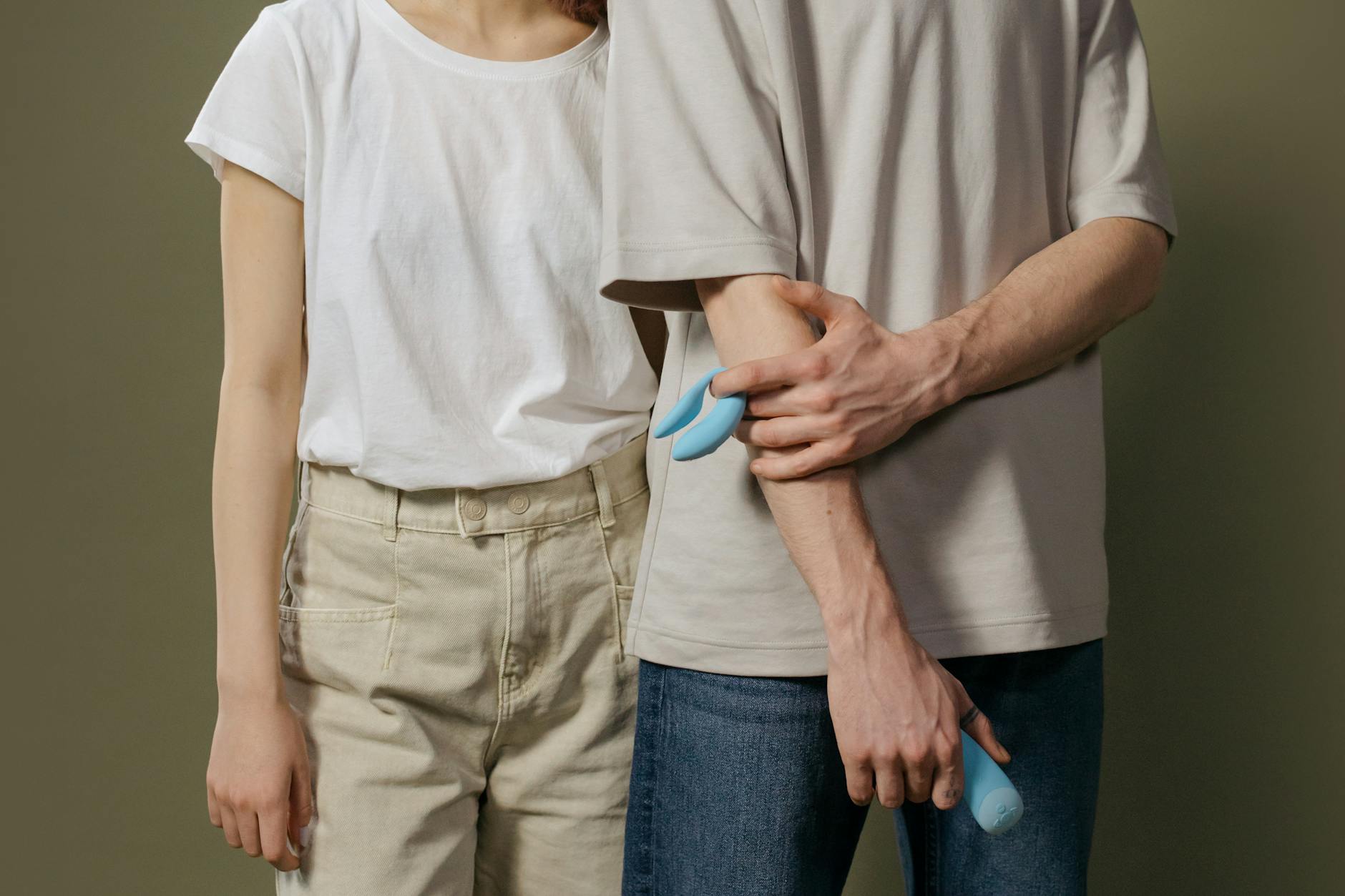
Photo by cottonbro studio on Pexels
Timing matters more than you think
The refractory period isn't the same for everyone, and it's not even the same for one person every time. What takes three minutes on a Tuesday might take fifteen minutes on a Friday. Age, stress, hydration, how intense the last orgasm was, and whether they had coffee all factor in.
Instead of waiting until your partner says they're ready, have a conversation beforehand. Ask them: after you orgasm, do you want to keep going with me using a vibrator, or do you want to take a break? Some partners love the idea of watching you get pleasure while they recover. Others find it activating and want to get back in the game faster. Some genuinely need quiet time and a glass of water.
There's no wrong answer, but knowing the answer in advance means you're not negotiating consent and desire in the middle of sex when emotions are high and bodies are tired.
How to actually use a lemon vibrator during his recovery
Here are the practical moves that work.
Start before he's fully done. Don't wait for him to completely lose the mood. Integrate the Lem while he's still in the moment. Have it nearby. The moment you feel his pace changing or his body signaling completion, you can transition smoothly to your own pleasure. He's not watching from the sidelines. He's watching from a different role.
Keep the physical connection going. Use one hand with the vibrator, but keep your body close to his. Foreheads touching, your leg over his, his hand on your chest. The vibrator is a tool, not a replacement. The intimacy comes from proximity and presence, not just sensation.
Start low and build slowly. The Lem has multiple intensity settings. Start at pattern one or two. Build from there. This gives his nervous system time to shift from active pleasure to receptive witnessing. It also means you're not hitting peak sensation immediately, which can actually extend the total time you're engaged together.
Talk about what you're feeling. "This feels incredible." "I love that you're watching." "Your hands feel so good right now." Narration keeps him engaged and reminds both of you that you're still having sex together, not sex in parallel.
Give him a job. Ask him to focus on a specific touch. Maybe his hand on your inner thigh while you use the vibrator. Maybe he controls the intensity level by watching your face and your reactions, adjusting it when he thinks you want more. Maybe he's responsible for kissing your neck. Small, manageable tasks keep him in the game without demanding his whole body perform.
Managing the emotional piece
Here's what I tell couples in my practice: a strong refractory period is not a flaw. It's biology. And it's actually a feature of lots of healthy, young bodies. But the conversation around it often gets bungled because no one talks about it directly.
Before you even bring a vibrator into the mix, you need to defuse the shame around the refractory period itself. The partner with the refractory period often feels broken or inadequate. The partner without it might feel rejected or cheated. Both of these feelings are normal and both are based on a misunderstanding.
What helps: framing the Lem as a tool for the couple, not a workaround for his inadequacy. You're not using it because he's failed. You're using it because his body works the way bodies work, and you both deserve continuous pleasure.
The refractory period might actually shorten
Here's something interesting that I see happen in practice. When couples take the pressure off the refractory period, when they stop fighting it and start working with it, the refractory period sometimes actually gets shorter. Not always, but often.
Why? Probably because anxiety and performance pressure make recovery take longer. When you remove the stakes, when you make it clear that his recovery time doesn't mean the sex has to stop, the whole nervous system relaxes. And when the nervous system relaxes, bodies recover faster.
You can't force this. But if you set things up right, it can happen naturally.
The conversation starter
If you've never actually talked about his refractory period directly, here's how to begin. Pick a time outside of sex. Say something like: "I love being with you. And I've noticed that after you come, you need some time before you're ready again. That's totally normal. I was wondering if you'd be open to me using a vibrator during that time, so I can keep going while you recover. That way we're still connected, but there's no pressure on you." Then listen.
He might say yes immediately. He might feel relieved. He might have concerns. All of those responses are valid, and they're all information you need to move forward.
Why the Lem specifically
Lemon clitoral vibrators like the Lem are designed around suction and pulsing patterns, not harsh buzzing vibration. That matters when you're using a vibrator during a longer session, because the sensation stays pleasurable instead of becoming numb or uncomfortable. The multiple settings mean you can adjust on the fly without stopping. And the design is elegant enough that it doesn't feel clinical. Your partner can watch without feeling like they've brought medical equipment into the bedroom.
FAQ
Can a refractory period be shortened with practice or training?
Not reliably, and it's worth knowing that trying to force it usually backfires. Refractory periods are governed by hormonal changes and nervous system recovery after orgasm, not by willpower or endurance. That said, overall cardiovascular fitness, stress management, and good sleep can support faster recovery in some people. The best approach is acceptance, not resistance. A lemon vibrator works around the refractory period instead of trying to override it.
Is it normal for refractory periods to get longer with age?
Yes, it's extremely common. In younger people, refractory periods might be seconds to a few minutes. By the 50s and 60s, they can stretch to 20 minutes, an hour, or more. This is not a sign of dysfunction. It's age-appropriate physiology. This is exactly why tools like the Lem become more valuable over time. They let both partners stay engaged regardless of hormonal shifts.
Will using a vibrator during his recovery make him feel inadequate or left out?
Possibly, if you spring it on him without warning or frame it as a workaround for his failure. But if you approach it as a way to maximize pleasure for both of you, and if you keep physical and emotional connection during use, most partners find it genuinely hot. Many couples report that incorporating a vibrator during recovery actually deepens intimacy because it removes resentment and pressure from both sides.
Can we use a lemon vibrator together even if he doesn't have a long refractory period?
Absolutely. The Lem is not a "recovery tool." It's a pleasure tool. Plenty of couples use clitoral vibrators during partnered sex because the sensation is incredible and because it lets them explore more varied types of pleasure together. The refractory period just makes it especially useful.
What if his refractory period is so long that we're going to lose the mood entirely?
That's worth bringing up with a doctor or sex therapist, especially if the refractory period is significantly longer than expected for his age and health. But in the meantime, the Lem helps you stay connected during that gap. You're not solving the refractory period. You're preventing it from derailing your sex life.
How do I know if the intensity is right while he's recovering?
Start low. Watch your own body and reactions. Ask him what he's noticing and enjoying about watching you. If you're genuinely enjoying it and he's engaged, you're calibrated right. If you're white-knuckling it trying to come, or if he looks bored or uncomfortable, adjust. This is not a script. It's a conversation that happens in real time.
The bigger picture
Every body is different, and refractory periods are just one of the ways bodies differ. The couples who navigate this successfully aren't the ones with short refractory periods. They're the ones who talk about what their bodies actually need, who approach those needs without shame, and who use tools like the Lem to keep pleasure flowing instead of letting it stop.
Your partner's refractory period isn't a problem to solve. It's a fact to work with. And when you work with it instead of against it, sex gets better for both of you.
Want to talk through how to navigate this specific dynamic in your relationship? Get in touch.