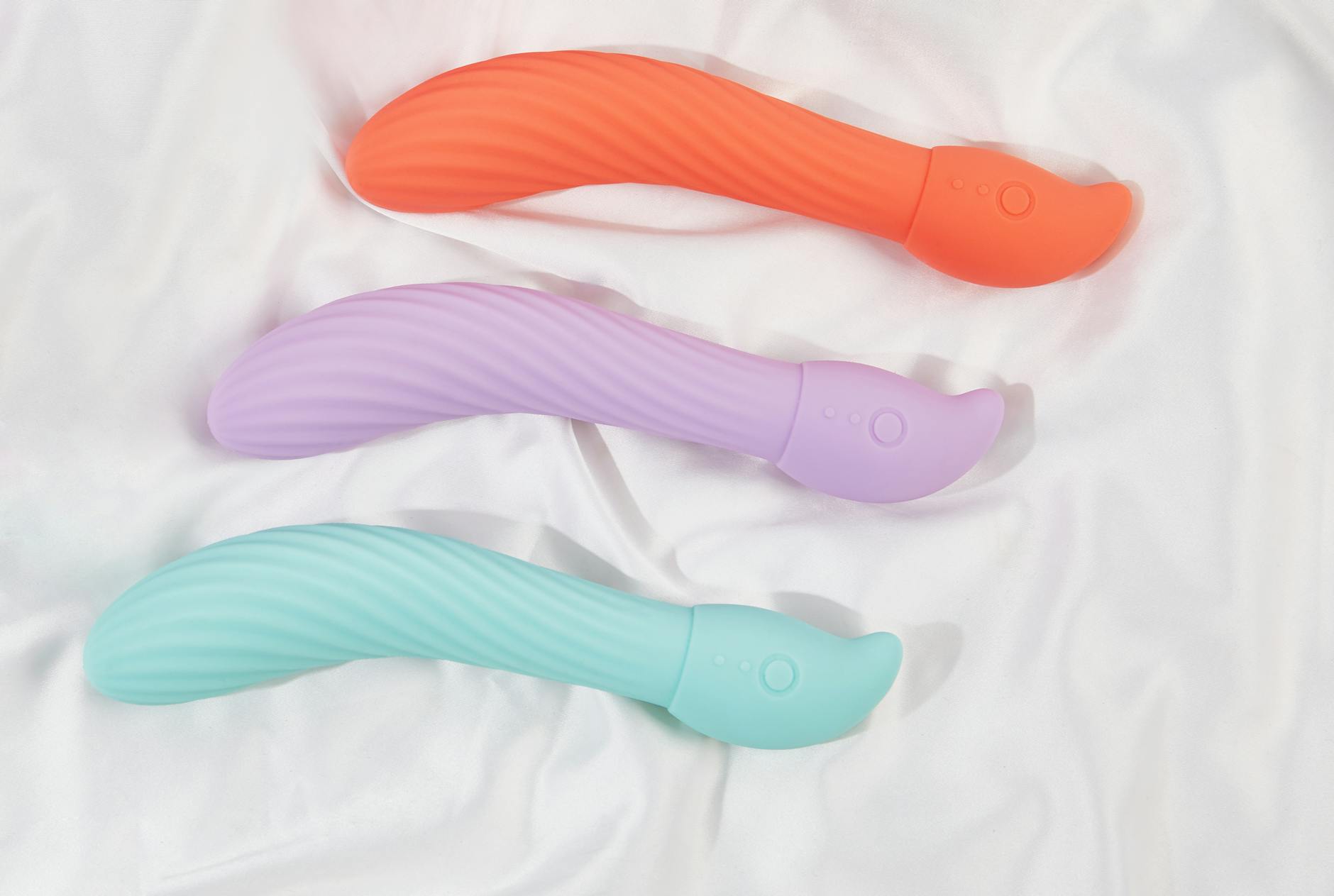
Let's talk about sensitivity and pleasure
Sensitive clitorises get a bad reputation. You hear "sensitive" and think "delicate" or "broken." Actually, you've just got a nervous system that knows what it wants. The trick isn't making yourself less sensitive. It's learning to work with your sensitivity instead of against it.
A lemon vibrator, also called a lemon clitoral vibrator or lem vibrator, can feel amazing for sensitive tissue when you approach it strategically. The key is understanding your own body's limits and building up from there.
Why lemon vibrators work better for sensitive clits
Most vibrators use rapid oscillation to stimulate. That approach works for some people. For others, it's like someone tapping your clitoris at 10,000 times per minute when you want 200. Not better. Just exhausting.
Clitoral suction vibrators work differently. They create rhythmic pulsing sensations through gentle suction instead of direct vibration. This feels significantly different to sensitive tissue. The stimulation is broader, gentler, and builds pleasure without the sharp intensity that can feel overwhelming.
If you've had partners comment that your clitoris seems "overly responsive" or if you find most vibrators too intense by pattern two, you're probably dealing with genuine sensitivity. That's not a problem. That's information.
Start with the lowest setting and sit with it
Here's the mistake most people make: they want to test all the intensity levels immediately. It feels good on level one, so they jump to level three. Then level five feels shocking, so they assume they're just not a vibrator person.
Instead, spend time with level one or the first pattern. Boring? Probably. But boring is how you learn what your body actually responds to. Give yourself 5-10 minutes at the lowest setting before you even think about turning it up. You might find the pleasure builds gradually. You might also find you never need to turn it higher.
Many people with sensitive clitorises report that staying on the lowest setting of a lemon clitoral vibrator actually produces more intense orgasms than cycling through higher speeds. Your nervous system isn't spending energy managing overstimulation. It's free to focus on building and releasing pleasure.
Positioning matters more than intensity
Where the vibrator sits on your body changes everything. Dead-center pressure on the clitoral head feels sharp and often uncomfortable for sensitive people. Slight angle or offset positioning spreads the stimulation across a wider area and immediately feels softer.
Try angling the vibrator slightly toward your thigh or your pubic mound. Or position it so it's stimulating the area around the clitoris rather than directly on the glans. You can also fold a small piece of fabric or use your outer labia as a buffer between the toy and the most sensitive spot.
This isn't a workaround. It's actually the most direct path to what feels best. Sensitive clitorises often respond better to broader, more diffused stimulation than concentrated pressure. Honor that preference.
Lubrication transforms the experience
Lubricant isn't just about comfort. For sensitive tissue, the right lubrication changes how the vibrator's sensation registers. Without it, you're getting friction plus vibration, which is often too much. With a high-quality water-based lubricant, the sensations separate. The vibration becomes the primary input, and the friction is smooth, almost secondary.
Water-based lubricants work best with silicone toys like most lemon vibrators. They're safer for sensitive tissue, easier to clean off, and won't degrade your toy. Reapply as you go if you're using your toy for longer sessions. What feels dry in the moment often creates that overstimulation sensation that sensitive people describe.
You're not wet enough if you're uncomfortable. You need more lubricant. Simple as that.
Warm-up time is nonnegotiable
A sensitive clitoris benefits from arousal buildup more than most bodies. Jumping straight to the vibrator while you're not fully aroused is like starting an exercise routine at sprint pace. Your nervous system hasn't prepared for intense sensation.
Spend 10-20 minutes on foreplay, fantasy, or whatever brings you into arousal before you even introduce the vibrator. Touch your body. Read something that turns you on. Let your blood flow shift to your genitals and your skin become more responsive. Then introduce the toy on its lowest setting.
The difference in sensation is dramatic. The same vibrator setting that felt sharp and uncomfortable without warm-up can feel perfectly pleasurable when your body is genuinely aroused.
Distance and time matter for overstimulation
Sensitive clitorises often hit a ceiling. Past a certain point of stimulation, more intensity doesn't feel better. It feels like too much. Some people describe it as numbness or irritation. Others say it feels like a sharp, unpleasant sensation that shuts pleasure down completely.
This is your signal to stop. Not because something is wrong with you, but because you've reached your body's actual limit for that session. Back off. Let sensation reset. You might come back five minutes later and be able to continue, or you might not. Both are completely normal.
Work with a timer if you need to. 15 minutes with a clitoral vibrator is often the limit for sensitive people. More than that often leads to that wall. Shorter sessions, repeated over a week, might produce better overall pleasure than pushing through.
Communication with partners changes everything
If you're using a vibrator with a partner present, clear language beforehand prevents frustration. "I might use this on the lowest setting for a while" or "I might need to stop before you'd expect" removes the implication that something is wrong.
Partners sometimes interpret sensitivity as a reflection on their attractiveness or their technique. It's not. It's your nervous system's actual bandwidth. When you normalize that in conversation, you remove the emotional layer that complicates the physical experience.
Ask your partner to respect the pace you set, even if it looks slow. Ask them not to suggest turning it up unless you ask first. These aren't limitations. They're the conditions under which you actually experience pleasure.
Explore patterns, not just intensity
Many lemon vibrators include pattern modes alongside intensity settings. Intensity controls how strong the vibration is. Patterns control the rhythm. For sensitive people, experimenting with different patterns often reveals more options than intensity adjustment alone.
A gentle constant vibration might feel like too much, but a pulsing pattern at the same strength might feel perfect. Or a slow ramp-up pattern. Or a rhythm that mimics breathing. Most people don't think to try these because they get stuck on intensity, but patterns are often the secret unlock for sensitive bodies.
Give yourself permission to try every pattern on the lowest setting before you ever turn up the intensity. You might never need to.
Aftercare and recovery
Sensitive tissue benefits from a cool-down period. After orgasm, your clitoris stays super responsive. Continuing stimulation can feel painful rather than pleasurable. Some people experience a genuine sensitivity hangover, where the area feels tender for 12-24 hours after vigorous use.
Back off gradually. Let your body rest. Stay hydrated. This isn't damage. It's just nervous system recovery. The more gently you treat yourself in the window right after orgasm, the faster you bounce back and the sooner you can enjoy sensation again.
How Hello Nancy's approach helps
Clitoral vibrators designed with sensitivity in mind use patterns and suction instead of raw intensity. The Lemon vibrator, for example, was engineered with graduated intensity precisely so people could stay in that sweet spot rather than jumping to overwhelming.
If you're exploring clitoral vibrators for the first time with sensitivity concerns, reading the detailed setting options matters more than brand choice. A toy with five intensity levels gives you better control than one with just high and low.
FAQ: Using vibrators with sensitive clitorises
Can I use a regular vibrator if my clitoris is sensitive?
Yes, but you'll probably get better results with tools designed around sensitivity. Standard bullet vibrators and wand vibrators often start at intensity levels that already feel too strong for sensitive people. If you want to use what you have, stay on the lowest setting and use positioning and lubrication strategically to reduce intensity further.
How do I know if my clitoris is actually sensitive or if I just haven't found the right toy yet?
True sensitivity usually shows up the same way across different vibrators. If every single vibrator feels overwhelming by pattern two or three, you likely have a sensitive clitoris. If you find one that feels good, the sensitivity might be about toy type rather than your body. Suction vibrators and patterned toys are worth testing before you decide vibrators aren't for you.
Is it normal for my clitoris to feel sore after using a vibrator?
Some tenderness immediately after is normal. Your tissue has been stimulated actively. If soreness lasts more than 12 hours, you used too much intensity for your body. Back off next time. If it persists across multiple sessions, talk to a gynecologist. Genuine pain during or after sex warrants professional evaluation.
Can sensitivity change over time?
Absolutely. Sensitivity shifts with hormonal cycles, age, stress, health conditions, and even relationship changes. What felt overwhelming last month might feel manageable now. Check in with your body regularly instead of assuming your preferences are fixed.
Should I be using numbing creams to use vibrators if I'm sensitive?
No. Numbing creams mask the signals your body is sending. If you're numb, you can't tell when you're overstimulated, and you risk tissue damage. The goal is to work within your body's actual sensitivity, not override it. If the sensation still doesn't feel manageable with all these strategies, that's information that vibrators might not be your thing right now. That's okay too.
What's the difference between sensitivity and pain?
Sensitivity is heightened responsiveness. Pain is your nervous system saying something is wrong. If a vibrator produces pleasure that's just intense rather than pain, you're dealing with sensitivity and control. If it produces actual pain, stop. Pain is never the target.
The bottom line
Sensitivity isn't a flaw in your pleasure capacity. It's a different map of how your nervous system registers sensation. When you work with that reality instead of against it, vibrators can become a genuine tool for deeper pleasure. Start low. Give yourself time. Respect your boundaries. And remember that the slowest, gentlest session that actually feels amazing is infinitely better than pushing yourself through something that doesn't.
Your body knows what it needs. Your job is learning to listen.