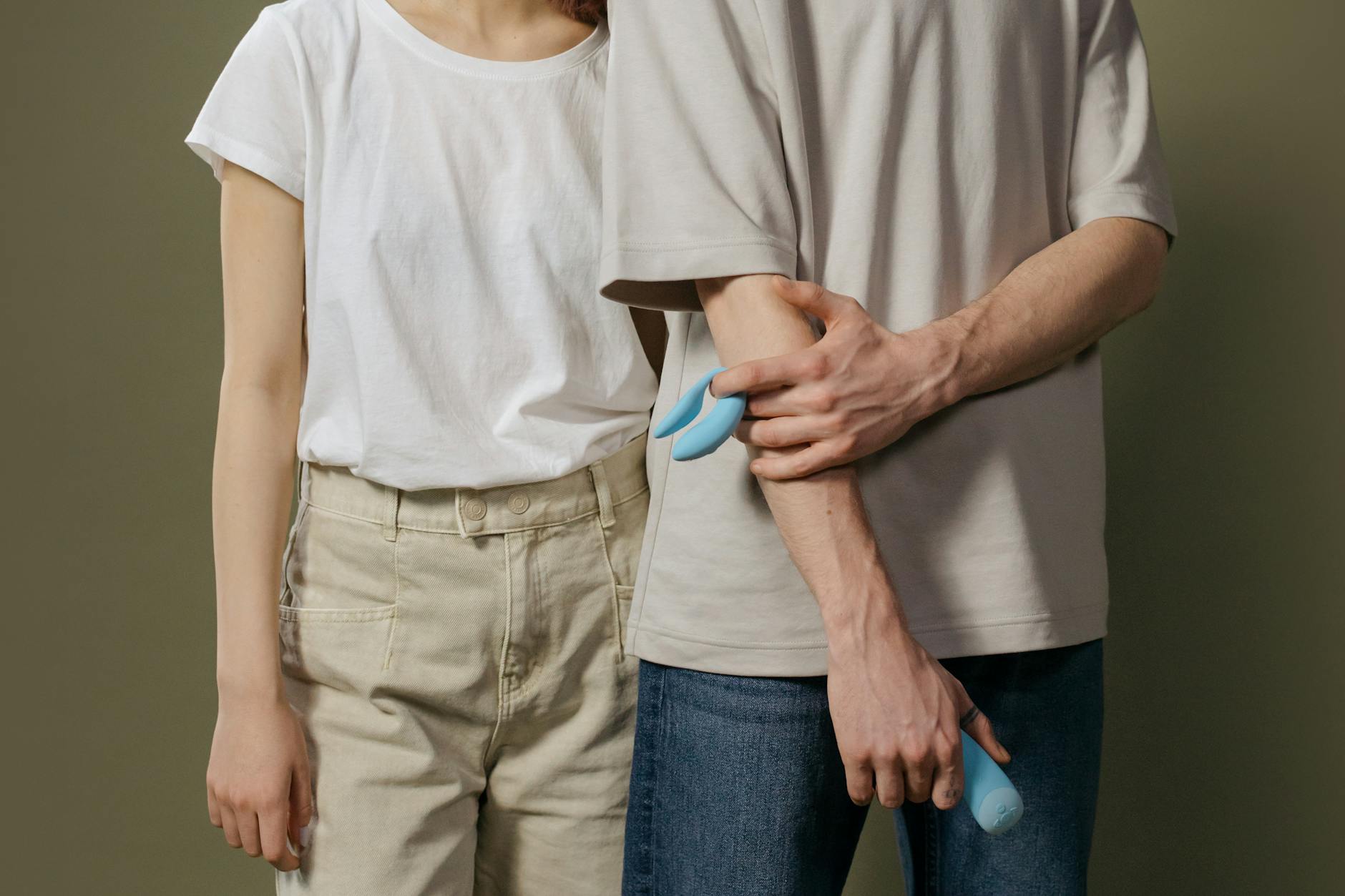
Let's talk about what flat arousal actually means
Here's the thing: arousal that takes forever to build, or barely shows up at all, is wildly misunderstood. Most people think it means desire is gone. It usually means something else entirely. Your body's signaling system is working fine. It's just not getting the message.
That message might be emotional (stress, disconnection, resentment). It might be physical (medications, hormones, fatigue). It might be contextual (poor timing, distractions, pressure). Or it might be about sensation itself. Your nervous system has learned to tune out whatever stimulation you've been using, and it needs a different kind of input to wake up.
The good news: arousal can be rebuilt. And a lemon vibrator, specifically, works differently than the toys or techniques most people have already tried.
Why arousal gets stuck in neutral
Let me break down the most common culprits I see in my practice.
Habituation. Your nervous system adapts to repeated stimuli. If you've been using the same vibrator the same way for years, or if penetrative sex with a partner follows the same rhythm every time, your body stops registering it as novel. The signals flatten. This isn't a libido problem. It's a novelty problem.
Distraction posing as low desire. You're thinking about the kids, the deadline, the fight you had, whether the laundry got done. Your mind is split across four tasks. Of course arousal isn't building. Your brain isn't available. This feels like "I don't want this," but what you're actually experiencing is "I can't focus on this."
Misaligned timing. You're trying to get aroused when your cortisol is elevated (morning rush, right after work), or when you're exhausted, or when you're full of resentment toward your partner. Arousal has physiological requirements. It's not about willpower.
Sensation mismatch. The stimulation you're getting doesn't match what your nervous system actually needs right now. Too much pressure. Too little intensity. The wrong texture. The wrong rhythm. Wrong patterns altogether.
The reason a lemon vibrator often helps where other toys don't is simple: the suction mechanism creates a completely different signal than vibration alone. It's novel to your body, which wakes up your nervous system. And you can modulate the intensity and patterns in ways that traditional vibrators can't offer.
How arousal actually rebuilds
It's not about forcing desire. It's about creating the conditions where desire can emerge again.
Think of it like this: your body is a radio. Flat arousal means the signal is weak or the dial is turned to a station that isn't broadcasting. You can't shout at the radio and make it work better. You have to retune it.
First, novelty. Your nervous system responds to new input. When you introduce a lemon clitoral vibrator with suction patterns you've never experienced, your body pays attention again. This isn't about shock value. It's about reactivating the pathway between sensation and arousal response.
Second, control. Arousal often flatlines when you feel powerless or controlled in the experience. Solo exploration with a tool designed for your anatomy and rhythm (not your partner's preferences) can feel radically different. You're directing the experience. That agency itself can unlock arousal.
Third, permission. Somewhere in the messaging, you've probably picked up that wanting things, needing time to warm up, or exploring differently means something is wrong with you. It doesn't. Giving yourself explicit permission to take 20 minutes instead of 5, or to change what you're doing mid-session, creates psychological space for arousal to happen.
Practical steps for using a lemon vibrator when arousal is slow
Start with zero pressure. Don't use this as a performance test. "Will I get aroused?" is a question that creates the opposite of arousal. Reframe it as exploration. "What sensations feel good right now?" or "How does this pattern compare to what I've felt before?"
Create actual separation from your life. This means 15 minutes where your phone is not in the room, your brain isn't problem-solving, and you're not half-watching a screen. Arousal can't compete with task-switching. Your nervous system needs genuine permission to shift gears.
Start at low intensity. If you're using something like the Lemon vibrator with suction settings, begin at pattern 1 or 2. Let your body register the sensation without overwhelming it. Slow build is where the signal gets strong. Immediate intensity feels like shock, not arousal.
Spend time on non-responsive areas first. If your clitoris feels numb or slow to respond, try patterns on your labia, inner thighs, or breasts first. You're waking up your whole erogenous landscape, not rushing to your most sensitive area. This takes pressure off the part that feels "broken" and reminds your body what pleasure feels like in general.
Pay attention to what actually shifts something. Is it a particular pattern? A specific speed? A certain rhythm? The shape of the stimulation? Notice without judgment. You're building a map of what your nervous system responds to right now. That map will inform every future session.
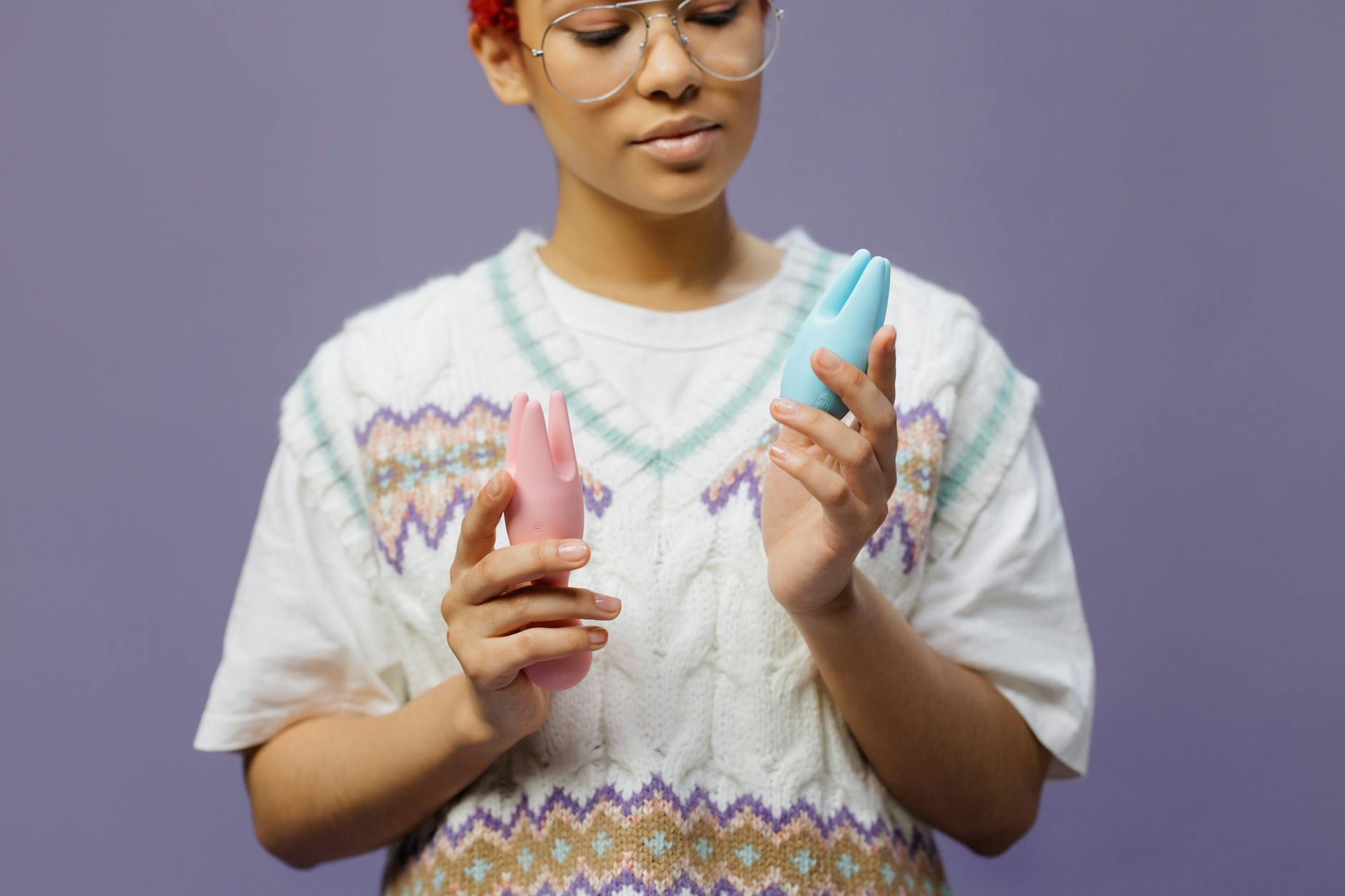 Photo by cottonbro studio on Pexels
When arousal delay is really about your partnership
If you're in a relationship, flat arousal often isn't about your body at all. It's about the emotional climate.
You can't arousal your way into trust, safety, or feeling seen. A clitoral vibrator might help you reconnect with your own capacity for pleasure, which is valuable. But if the underlying issue is resentment, disconnection, or unresolved conflict, the lemon adult toy becomes a solo experience, not a path back to partnered sex.
In my work with couples, I often see partners assume that introducing a toy means something is "wrong" with them or that the relationship is in crisis. It's neither. A lemon vibrator can be a bridge back into your own body when stress or disconnection has you numb. That's not a replacement for the partnership. That's a way to reclaim your side of the equation.
If you want to use this to reconnect as a couple, start solo first. Rebuild your own arousal signal. Then invite your partner into it when you feel that signal rebuilding. Watching someone you love find pleasure again often softens the walls between you.
The nervous system piece people miss
Here's what neuroscience shows us: arousal is a nervous system state, not a feeling. Your parasympathetic nervous system has to be online. That means your body has to perceive safety. And safety is hard to feel when you're rushed, resentful, distracted, or performing.
A lemon vibrator works partly because it's a clear "this is for me" signal. It's not ambiguous. It's not about your partner or their timeline. It's explicitly about your pleasure. Your nervous system registers that. And when your nervous system feels like pleasure is actually the point (not a chore, not a performance metric), arousal becomes possible.
That doesn't mean you'll suddenly feel wild desire. But the flatness often lifts. The signal gets stronger. Your body starts responding again.
When arousal delay signals something else
If you've rebuilt novelty, given yourself real permission and time, removed distractions, and arousal still isn't moving, that's information worth exploring with a practitioner.
Sometimes flat arousal is about hormones. Sometimes it's about medications (particularly SSRIs). Sometimes it's about trauma or a history you haven't fully processed. None of these things mean there's something wrong with you. They mean you might need support beyond a better toy.
A lemon vibrator can help you reconnect with sensation and explore what your body responds to now. That's real information. It's also not a substitute for addressing the root cause if one exists. Use it as part of your exploration, not as the whole picture.
FAQ: Arousal, lemon vibrators, and getting back on track
Why does my arousal feel completely flat when it wasn't always like this?
Arousal flatness usually isn't sudden loss of desire. It's habituation, stress, disconnection, or misalignment between your current needs and current stimulation. Your body adapts to repeated input. When the input stays the same, the signal weakens. Changing the type of stimulation, the context, or the timing often shifts things noticeably within days.
Can a lemon clitoral vibrator actually fix low arousal or is it just a distraction?
It depends what's driving the low arousal. If it's habituation or sensation mismatch, a clitoral vibrator like the Lemon can genuinely help. The suction mechanism creates novel input your nervous system hasn't adapted to. If it's relational conflict, burnout, or hormonal, the vibrator is one piece of a bigger puzzle. It can help you rebuild your own arousal signal, but it won't fix the underlying cause on its own.
How long does it usually take before arousal starts building normally again?
Many people notice shift within 3-5 sessions of intentional solo exploration with a new toy. Your nervous system recognizes novelty quickly. That said, rebuilding arousal in a partnership takes longer because it involves emotional components too. Give yourself at least 2-3 weeks of consistent attention before deciding what you're really working with.
Is delayed arousal a sign my partner isn't attractive to me anymore?
Almost never. Arousal delay is usually about context, your own headspace, habituation to familiar stimulation, or unresolved tension in the relationship. It's rarely about attraction itself. If you still find your partner attractive when you're thinking about them separately from the sexual context, arousal delay is almost certainly something else.
Should I tell my partner I'm using a lemon vibrator to explore arousal on my own?
That depends on your relationship agreements. Some couples share everything. Some maintain privacy around solo play. The key is clarity and honesty. If you're rebuilding arousal and you want to eventually bring that back into partnered sex, your partner will eventually know. Approaching it as "I'm exploring what my body needs" is usually easier than keeping it secret and having it discovered later.
If I use a clitoral vibrator solo, will it affect arousal with my partner?
Actually, the opposite often happens. When you rebuild your own arousal signal through solo exploration, you often bring that back to partnered sex. You know what patterns work. You know what you need to feel something. You can communicate that. That usually improves partnered sex, not diminishes it.
The real work is attention
Final thing: arousal that feels flat often reflects how we've been treating pleasure in general. Like it's something we fit in around the edges. Like it has to happen automatically. Like wanting it too much means something is wrong with us.
A lemon vibrator can help you rebuild sensation and novelty. But the deepest part of the work is deciding that your arousal matters. That exploring what feels good is worth 20 minutes of your time. That you deserve sex and pleasure that actually lands, not just sex that happens.
That decision shifts things faster than any toy ever could. The vibrator is just the tool that lets you act on it.
If you're ready to explore your own arousal in a new way, solo first and without pressure, that's where the signal starts coming back. And if you want support navigating how this intersects with your partnership or other pieces of your life, that's what I'm here for.
You can reach out anytime at /contact.