Here's the thing about pleasure timing
One partner finishes in eight minutes. The other needs twenty. One person wants butterfly-soft stimulation. The other craves intensity. This isn't a problem with your relationship or your bodies. It's just physics. And it's wildly common.
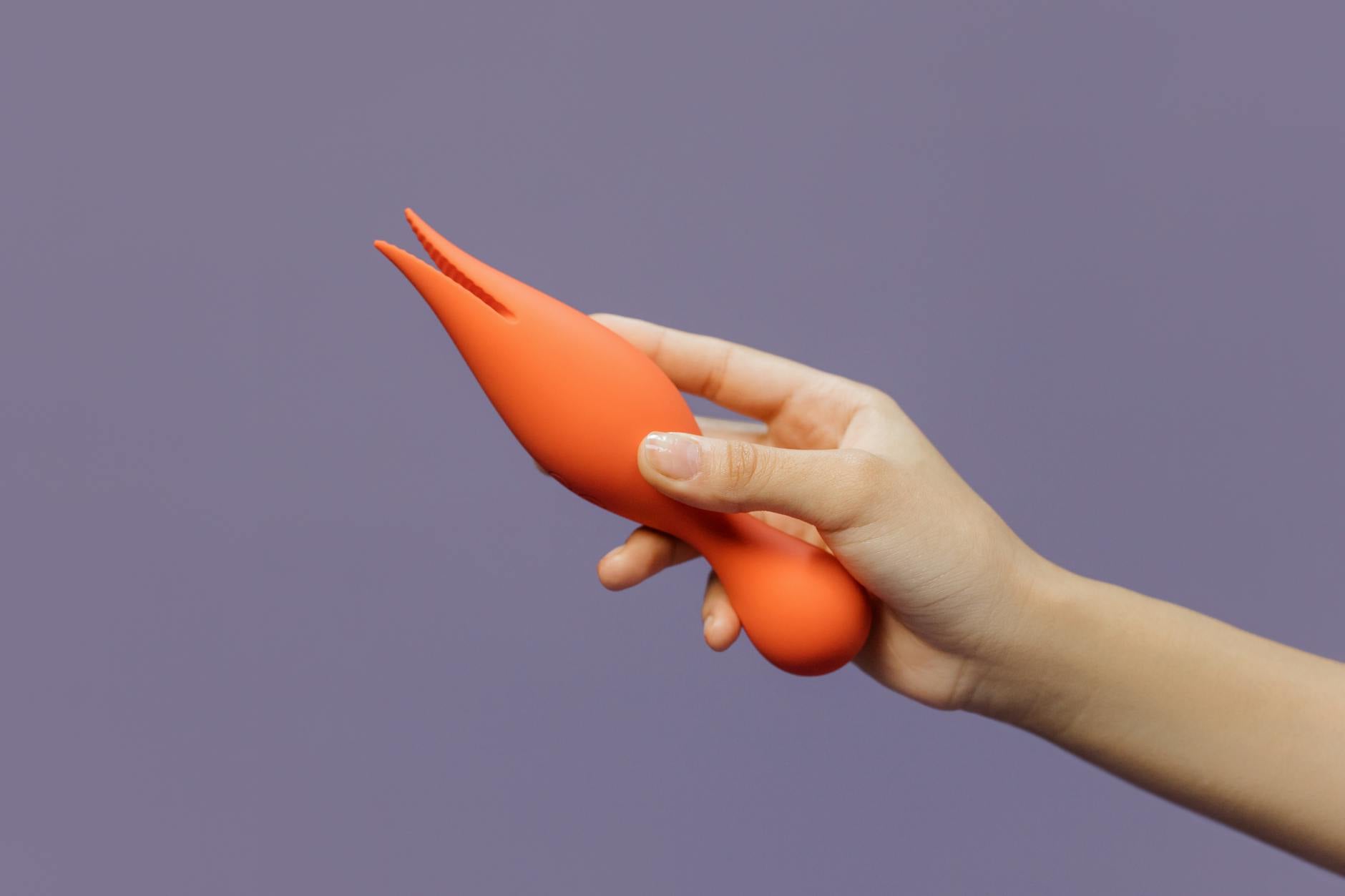
What makes it tricky is that most couples try to solve it by slowing down, speeding up, or pretending the gap doesn't exist. A lemon vibrator—a clitoral toy designed for speed and precision—actually gives you a third option: synchronizing pleasure instead of forcing it.
Why pleasure gaps happen in the first place
Pleasure isn't a single speed. Bodies vary wildly in how quickly they build arousal, how they prefer to be touched, and what intensity takes them over the edge. Factor in stress, medications, age, hormonal shifts, and individual wiring, and you're looking at something closer to two different pleasure profiles sharing one bed.
Here's what I see in my practice: couples don't fight about the gap itself. They fight about the stories they attach to it. "If you came faster, I'd feel more attractive." "If you didn't need so much time, I wouldn't feel so anxious." "Why do I always have to wait?" The gap becomes evidence of mismatch instead of just... a gap.
A lemon sexual toy bypasses that storytelling entirely. It's external, it's mechanical, and it's nobody's fault. It just works differently than hands or a body do.
What a lemon vibrator actually solves
Let's say one partner reaches orgasm through penetration. The other doesn't, or takes much longer. Typical fix: add manual stimulation. But now you've got a coordination problem. Hands tire. Angles get awkward. Someone's arm falls asleep.
A lemon vibrator—especially one like the Lem, which uses air-pulse suction rather than buzzing—creates consistent, hands-free sensation. One partner can focus on penetration. The other gets sustained clitoral stimulation without anyone getting cramped. You're no longer competing for pleasure bandwidth. You're working in parallel.
Same dynamic applies if intensity preferences clash. One person likes deep, broad stimulation. Another wants pinpointed pressure. A lemon clitoral vibrator gives that second person exactly what their body wants, while the first partner does their thing.
The practical setup that actually works
First: talk about it before you're in the moment. "I've been thinking about trying a toy together. Not because anything's wrong, but because it might feel good for both of us." That sentence prevents defensiveness.
Second: choose a tool that works for both your bodies. The Lem, for instance, has multiple sensation patterns. Start on pattern one or two. You're not trying to rush anyone. You're trying to find a rhythm that lets both people arrive at pleasure simultaneously.
Third: position matters. If you're having sex, the person using the vibrator needs clear access and stability. A pillow under the hips, side-by-side positioning, or sitting facing each other all work. The vibrator sits on the clitoris while penetration (or other stimulation) happens separately.
Fourth: use a water-based lubricant. Air-pulse toys work better with a little slip. It's not because anyone's body is wrong. It's just mechanics.
How to use it without it feeling weird
Honestly, the weirdness usually fades within about thirty seconds of use. Your brain stops analyzing and starts feeling.
Start with low sensation. Let yourself get used to the vibration while your partner does whatever you're doing together. Don't choreograph it to death. "Okay now I'll move when you breathe"—that's overthinking. Let your bodies find their own tempo.
If you're the partner with the longer pleasure timeline, pay attention to what the toy is actually giving you. Some people think vibrators are supposed to feel like a jackhammer. They're not. A lemon sucker uses gentle suction and pulses. It's more like a mouth than a power tool. When you stop bracing against the expectation of intensity, the sensation lands differently.
If you're the partner who typically finishes first, this is your moment to stay present. You don't have to perform endurance. You just have to not check out. Keep touching your partner. Keep eye contact. The pleasure gap closes when both people are actually there.
When pleasure gaps signal something deeper
Sometimes a gap isn't just biology. Sometimes it's resentment, disconnection, or mismatched desire altogether. A lemon vibrator won't fix that. What it will do is create space for you to notice.
If you use it and one partner seems withdrawn or actively resistant, that's worth a conversation outside the bedroom. "I felt like you weren't into it" is different from "my body works differently than yours," and that difference matters.
Similarly, if the gap widens over time, or pleasure drops off entirely for one partner, consider whether something else is going on. Medication changes, stress, relationship tension, hormonal shifts—all of these live in the bedroom even when they start somewhere else.
But if you're both willing and the gap is just a gap, a lemon clitoral vibrator genuinely simplifies things. It takes something you've been trying to solve with communication or compromise and makes it a logistical non-issue instead.
The pleasure synchronization that follows
Here's what often happens after a few times: your bodies start learning how to time-share pleasure better. Not because the vibrator changed your biology, but because you stopped fighting the gap. You accepted it, worked with it, and gave each other permission to have different pleasure rhythms.
Some couples find that once they've used a lemon sexual toy a few times, they don't need it as often. The anxiety about "matching" dissolves. Other couples find they prefer it most of the time, because it just works better for their bodies.
Neither outcome is better. Both are you solving your own specific equation.
FAQ
Can you use a lemon vibrator if you're not having penetrative sex?
Absolutely. If you're doing any kind of partnered pleasure together—oral, manual, rubbing, whatever—a lemon clitoral vibrator can be part of it. The vibrator isn't tied to penetration. It's just another source of sensation.
What if one partner is way more sensitive and the intensity is too much?
Start at the lowest setting and work up from there, or stay there indefinitely. Lower intensity doesn't mean less pleasure. It often means better pleasure, because you're not bracing against overstimulation. The Lem has multiple patterns precisely so you can dial in what works.
Is using a toy during partnered sex a sign something's wrong with our relationship?
No. It's actually the opposite. You're both showing up, paying attention, and trying to make things better. That's the definition of relationship health. Adding a toy is problem-solving, not problem-admitting.
How do you talk about pleasure gaps without hurting your partner's feelings?
Don't frame it as a problem with them. Frame it as a problem with the current setup. "I love having sex with you. Our bodies just work on different timelines, and I want us both to actually get there together." That's honest and it's not blame.
Does using a lemon vibrator mean you're not attracted to your partner anymore?
No. If anything, it's the opposite. You care enough about their pleasure—and yours—that you're willing to try something new. Attraction isn't about doing it the same way forever. It's about staying engaged.
What if my partner suggests a toy and I feel insecure about it?
That's real and it's worth saying out loud. "I feel a little insecure about that" gives your partner information. They can respond to it. What you don't want is silent resentment. If your partner is suggesting it because they care about synchronizing pleasure, that's different from them saying "you're not enough." Listen for which one it actually is.
The bottom line
Pleasure gaps are one of the most honest problems couples face. You both want good sex. Your bodies just run different timelines. A lemon vibrator—especially a clitoral toy like the Lem—doesn't erase the gap. It makes the gap irrelevant. You stop trying to match each other and start focusing on both getting there. When you take the coordination pressure off, pleasure usually shows up.
If you're curious about trying one, start a conversation. No pressure, no performance. Just "I read something about lemon vibrators and I'm curious." That's all you need.