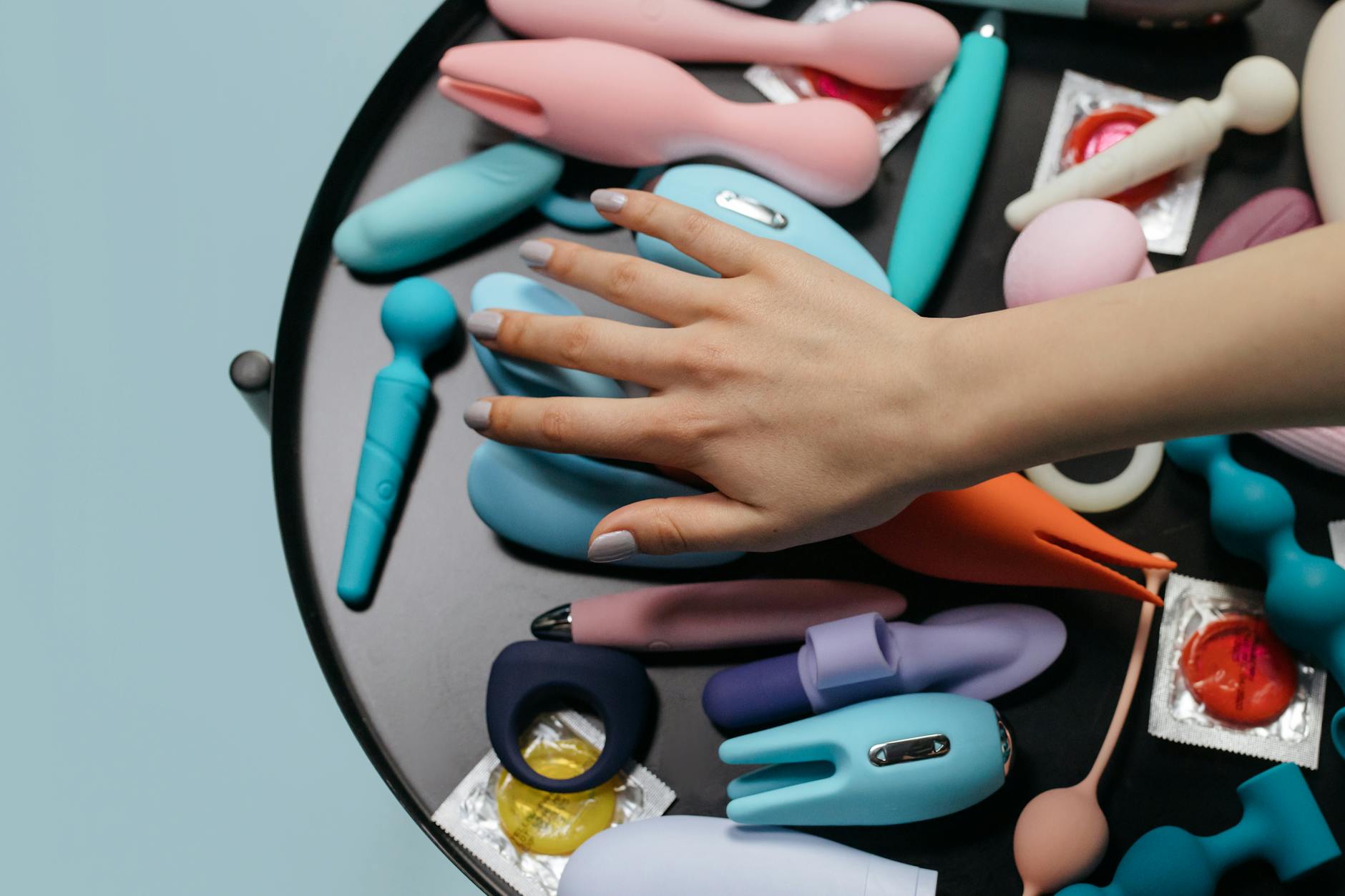
Let's talk about the weird transition nobody mentions
You've spent years, maybe decades, thinking about sex as a partnered activity. Your pleasure got tangled up with someone else's rhythm, their preferences, their presence in the room. Then something changes. Divorce, a breakup, widowhood, a shift in what you want from a relationship. Suddenly you're alone and staring at the possibility of solo pleasure, which should feel freeing but mostly feels... awkward.
Here's the thing: solo sex after years of partnered sex isn't just about removing another person from the equation. It's about remembering how to listen to your own body when there's no one else's needs competing for attention.
Why solo exploration feels different now
When you've spent years having sex with a partner, your nervous system learns a specific pattern. You get aroused in response to their touch, their attention, their desire for you. There's a feedback loop built in. Remove that person and suddenly you have to generate arousal from scratch, on your own terms, with no external validation happening in real time.
That's not a problem. It's actually an advantage. It means you can explore without performance pressure, without worrying if someone else is enjoying themselves, without the muscle memory of "this is how it's supposed to go." But your brain doesn't always feel like that's an advantage at first. It feels like you're doing something wrong.
You're not. You're just recalibrating.
Why lemon vibrators work particularly well for this transition
A lemon clitoral vibrator is different from other adult toys. Instead of direct vibration, it uses suction and gentle pulsing to stimulate the clitoris and surrounding tissue. For someone coming back to solo play after years away, this matters because it feels less intense than traditional vibration. You're not trying to replicate what a partner's hands or mouth might have done. You're creating an entirely new sensation that's just for you.
The design of a toy like the Lem means you can start gently and build slowly. The lower settings feel almost meditative. No rushing, no pressure to orgasm in a specific timeframe, no performing. Just you and your own attention.
Start with zero expectations
I tell most of my clients this: your first solo experience after years of partnered sex does not need to end in an orgasm. It needs to end in you feeling comfortable in your own skin again.
Set aside 20 to 30 minutes when you won't be interrupted. Phone on silent, door locked, whatever you need to feel safe. Don't set a goal. Instead, set an intention. "I'm going to spend this time learning what I like right now, at this stage of my life." That's it.
Start with the lemon vibrator on the lowest setting. Don't go straight to the clitoris. Explore the outer labia, the inner thighs, the area around the clitoral hood. Pay attention to what feels good versus what feels like you're waiting for good to happen. There's a difference.
The mental side of solo pleasure
Here's what I notice in my clinical work: women and people with vulvas who transition from partnered sex to solo exploration often sabotage themselves with their own thinking. You start to feel pleasure, then your brain interrupts with "is this weird that I'm alone?" or "I should be doing this faster" or "this doesn't feel like how it used to feel."
That's your old nervous system pattern trying to reassert itself. Notice it, then gently redirect. You're not doing anything wrong. Your body isn't broken. You're just learning a new language.
If intrusive thoughts keep derailing you, try this: pick one physical sensation to focus on. The exact pressure of the lemon vibrator against your skin. The temperature of your hand. Your breathing. Anchor to that sensation instead of your thoughts. This is the opposite of performance anxiety. It's just paying attention.
Building a routine that works for you
One of the unexpected gifts of solo exploration after partnered sex is that you get to decide everything. How often, how long, what time of day, what setting, what soundtrack or silence. For someone who's spent years accommodating another person's schedule or preferences, this freedom is genuinely powerful.
I usually suggest starting with once or twice a week, whatever feels sustainable. Don't turn it into another obligation. If you skip a week, fine. If you do it three times, also fine. The goal is to rebuild a relationship with your own pleasure that feels natural and unpressured.
Many of my clients find that having a little ritual helps. Maybe it's dimmed lights and a specific candle. Maybe it's a particular playlist or a shower first. Maybe it's nothing but getting into bed at a specific time. The ritual isn't the point. The point is giving yourself permission to carve out time and space for something just for you.
When partnered sex might happen again
One thing that surprised many of the people I work with: solo exploration often makes them better at partnered sex when it happens again. You learn what actually makes your body respond. You lose some of the performance anxiety because you've spent time alone with pleasure and nobody died. You develop a clearer sense of what you want versus what you think you should want.
If you do start seeing someone new, you don't have to announce that you've been exploring solo. But the confidence and body knowledge you've built comes through. You're more present, more direct about what feels good, less caught in old patterns.
Managing shame and self-judgment
I want to be direct here: if you're carrying shame about solo sex, that's worth looking at before you jump into a lot of exploration. Not because solo sex is shameful. It's not. But because shame will absolutely tank your ability to feel pleasure.
If you grew up with messaging that masturbation is wrong, or sinful, or something only certain kinds of people do, that messaging is still in your nervous system. You might need to do some work just acknowledging that it's there. Maybe that's talking to a therapist. Maybe it's just journal writing about what you learned about pleasure as a kid and whether you actually believe that stuff now.
Your body deserves this. Not because you're lonely or broken. Because you're a whole person with sexuality and sensation and the right to explore that alone if you want to.
Pace matters more than progress
There's no finish line here. You don't graduate from solo exploration. You're not working toward partnered sex. You're not trying to become someone who has a "healthy" relationship with masturbation by some external standard.
You're just learning yourself again. That takes time. Some sessions will feel amazing. Some will feel like nothing much happened and that's completely normal. The clitoris is incredibly sensitive to stress, fatigue, mood, hormones. Some days it'll be ready to party. Other days it'll need you to just sit with a lower setting and enjoy the company of your own body.
All of it is data. None of it is failure.
FAQ
How long should my first solo session with a lemon vibrator be?
Start with whatever feels manageable. If 10 minutes feels like enough, that's enough. If you want 30 minutes, take it. The clock doesn't matter. What matters is that you're present and not rushing. Many people find they naturally settle into 15 to 25 minutes once they're past the awkward beginning stage.
Is it normal to not orgasm on the first try?
Completely normal. Your nervous system has been trained to respond to partner-initiated touch. Solo arousal is a different pathway. Some people need several sessions before their body fully relaxes enough to go all the way. Others find their first solo orgasm after 10 minutes. Both are fine. The goal isn't the orgasm. The goal is comfort and reconnection with your body.
Should I use water-based lubricant with a lemon clitoral vibrator?
Yes, I recommend it, especially if your body takes longer to naturally lubricate or if you're dealing with any dryness. Even a small amount of water-based lube makes the sensation smoother and reduces friction that might feel uncomfortable. It's not a sign that something's wrong. It's just a tool that helps.
What if I feel guilty exploring solo after being with a partner for so long?
That guilt is common and it's worth examining. Ask yourself where that guilt comes from. Is it about loyalty? Shame about sexuality? Fear that wanting solo pleasure means something is wrong with you? Most of those narratives aren't actually true. Solo pleasure and partnered pleasure aren't competing. They're different. You're allowed to want both.
How do I know if I'm using the lemon vibrator correctly?
There's no "correct" way. The Lem is designed to be intuitive. You hold it against your clitoris and adjust the setting to what feels good. Start low, explore the different patterns, notice what your body responds to. Some people like sustained suction on the highest setting. Others prefer a lower setting with more time. Your preference is the right preference.
What if my mind keeps wandering during solo sessions?
Mind wandering is part of the process, especially at the beginning. You're not failing meditation. You're learning to be present with physical sensation again. When you notice your thoughts have drifted, just gently bring your attention back to the feeling of the toy, your breathing, or your body. No judgment. This happens to most people.
Exploring solo pleasure after years of partnered sex is a form of self-reclamation. You're not trying to prove anything. You're not trying to become someone else. You're just remembering that your pleasure matters, that your body is worth paying attention to, and that you deserve to feel good on your own terms. A lemon vibrator is just a tool for that. The real work is giving yourself permission.
If you're navigating this transition and want support thinking through what reconnection might look like for you, reach out to Get Lemon Wand. We're here to help you explore what works for your body and your life right now.