
Let's talk about the intimacy cliff
You just had a fight. Maybe it was small, maybe it was big. Either way, there's a current between you now. You want to reconnect, but the idea of sex feels either forced or impossible. Your body hasn't caught up to the apology. The tension is still sitting in your chest.
This is where most couples get stuck. They skip the bridge and jump straight to "let's have sex" before they've actually rebuilt anything. And then sex feels like negotiation instead of pleasure.
Why the rebuild needs a different pace
After conflict, your nervous system is still activated. Your partner's nervous system is too. When we're in that state, traditional intercourse often feels either too vulnerable or too demanding. You're not ready for that kind of exposure yet.
But physical touch matters. The research on this is clear. Couples who rebuild with slowness and intention actually reconnect faster than couples who push straight to sex. It sounds counterintuitive, but it works because you're rebuilding nervous system safety, not just checking a box.
This is where a lemon vibrator becomes genuinely useful. A clitoral vibrator gives you something focused and external to pay attention to, which means you can skip the performance and penetration conversations entirely. You can just feel good. And sometimes that's the exact permission you both need.
The three-stage rebuild
I usually walk couples through this in three phases, and a lemon vibrator fits perfectly into phase two and three.
Phase one: non-sexual touch. Hand on your partner's shoulder. A real hug. Sitting close while watching something. This is rebuilding basic safety and presence. No toys. Just skin.
Phase two: directed pleasure with the vibrator. This is where you're touching each other, but the focus is on sensation, not performance. The vibrator becomes permission to focus on what feels good rather than what you think should happen.
Phase three: shared pleasure. Integration. You're comfortable again. The vibrator might still be there, or it might not. But you're back to wanting each other.
Most couples rush from phase one straight to sex. They skip phase two entirely. That's why the reconnection feels hollow.
How to actually use a lemon vibrator in this moment
Start solo. Yes, really. This probably sounds backward, but here's the reasoning: using the vibrator alone first lets you separate two things that got tangled during conflict. You get to remember that pleasure is still available to you. That your body still works. That you haven't somehow broken.
Then, when you bring it into the space with your partner, it's not a fix. It's an addition. You're not trying to force yourself to want them. You're already reconnected to your own pleasure, and now you're inviting them into it.
When your partner is present, start with them using the vibrator on you. This removes the pressure of reciprocation. You're not "supposed" to do anything back yet. You're just receiving. And they're actively choosing to give you pleasure. That's genuinely healing after an argument.
Let the vibrator do the work for longer than feels natural. Most people rush. After conflict, give yourself a full 20-30 minutes of this if you can. Not because you need that long to orgasm, but because your nervous system needs to believe the pleasure is safe and not going anywhere.
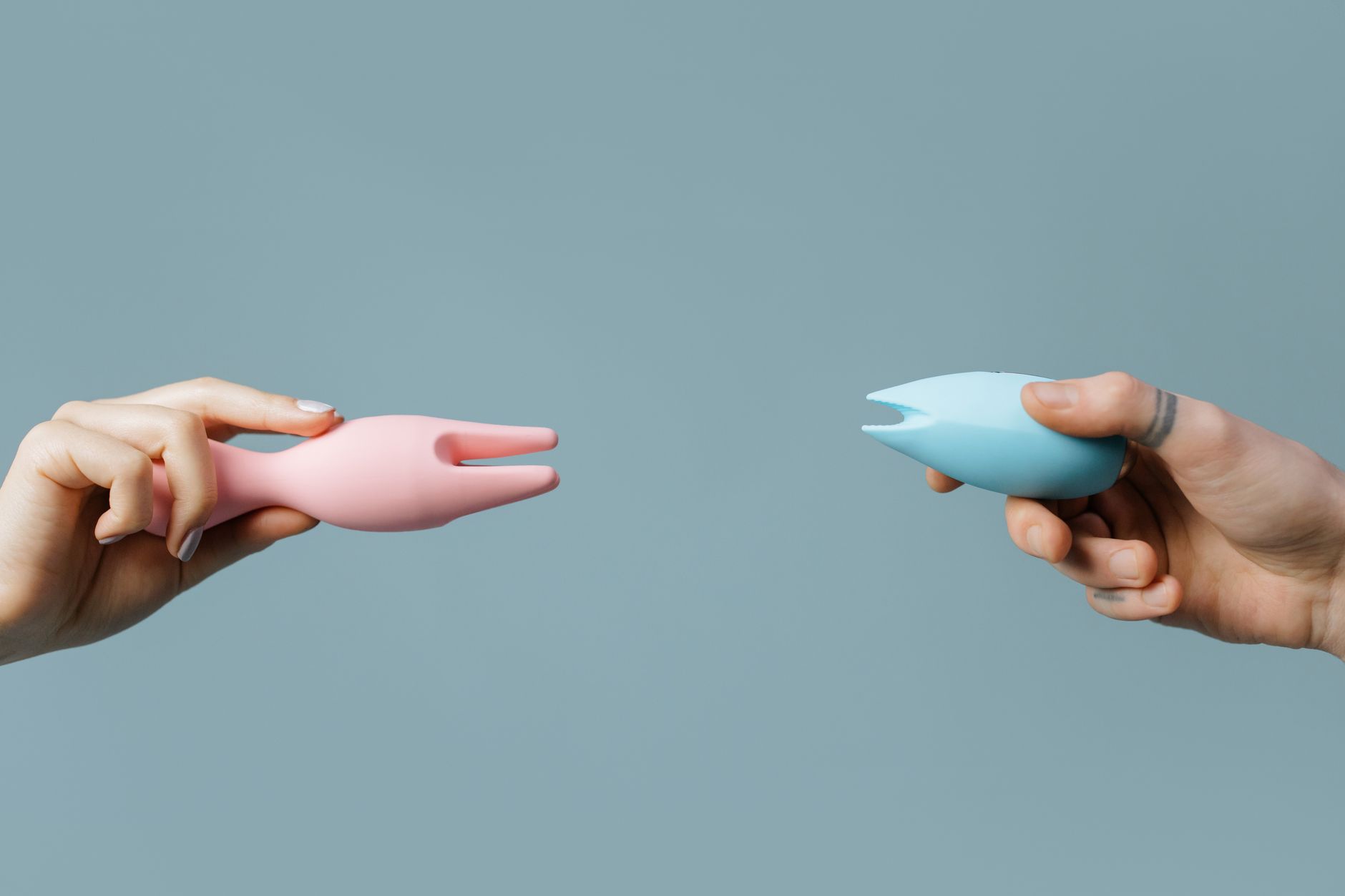
Photo by cottonbro studio on Pexels
The emotional texture of this matters
Using a lemon vibrator after conflict is not the same as using it on a regular Tuesday. Your brain is still reviewing the argument. It's still waiting for the other shoe to drop. The vibrator helps because it gives your nervous system something consistent to track.
But here's what actually rebuilds the intimacy: talking while it's happening. Not about the relationship. Just about what feels good. "This pattern feels good right now." "I like it slower here." These small communication loops are rebuilding trust in real time.
If talking feels too vulnerable still, that's fine. Silence is also okay. The point is that your partner is present and attuned to your body. That's what matters.
Many couples tell me that the first time they use a toy together after conflict, they cry. That's normal. You're releasing a lot in that moment. Tension, relief, reconnection, gratitude. All of it coming through your body at once. Your partner should know that's possible, and they should be ready just to hold space for it.
A few practical things
Lubrication helps because when your body is still stressed, natural lubrication lags. Use a water-based lube even if you don't normally need it. It makes the vibrator feel smoother and less demanding.
Start on a lower intensity setting. Intensity can feel aggressive right now. The goal isn't to chase an orgasm. It's to remember that pleasure is still there. Let it build slowly.
If your partner wants to use the vibrator on themselves while you watch, that's also a valid entry point. Watching your partner's pleasure can be more intimate than performing for them after you've been in conflict. There's something about witnessing someone let down their guard that rebuilds connection.
When it's time to move past the vibrator
You'll feel it. At some point, the vibrator will start to feel like training wheels. You'll want something different. Maybe it's the vibrator plus penetration. Maybe it's something else entirely. But you'll both sense that the basic nervous system safety has been rebuilt.
That's usually when the vibrator shifts from being part of the reconnection to being an option. It's there if you want it, but it's not the centerpiece anymore.
The bigger picture here
Using a lemon vibrator to rebuild after conflict is not a shortcut. It's actually the long way, which is why it works. You're choosing to slow down. You're choosing to rebuild sensation and safety instead of jumping to the finish line. And you're choosing to stay focused on your partner's pleasure instead of the urgency of "fixing" things.
That's what actually repairs a relationship. Not forgetting the fight. But choosing, repeatedly, to stay close anyway.
People also ask
Can you use a clitoral vibrator if you're still angry at your partner?
Yes, but you might feel resistant. That's okay. The resistance is information. If you're still genuinely angry, you might benefit from more phase-one work first (non-sexual touch, conversation, time). The goal isn't to use a vibrator to override anger. It's to use it once the acute anger has softened enough that you want physical reconnection. If you're not there yet, waiting is actually the right choice. Forcing pleasure onto anger creates a weird, disconnected feeling that doesn't help anyone.
How long should you wait after an argument before using a toy together?
This depends on the size of the conflict. Small argument, same day is fine. Medium conflict, 24 hours minimum. Big fight, I usually suggest waiting until you've had a real conversation about what happened. The vibrator is not a conversation replacement. Once you've talked, you can reconnect. If you haven't talked, you're just numbing. And numbing doesn't rebuild.
What if your partner feels weird about using a vibrator as part of the reconnection?
Talk about it separately, not during a moment when you're trying to use it. Ask what feels uncomfortable. Is it about the toy itself, or is it about what it represents? Often partners worry that introducing a vibrator means their partner doesn't want them anymore. That's the real conversation you need to have. The vibrator is just an object. The worry is the actual thing to address. Once that's clear, the object becomes less loaded.
Can a lemon vibrator help if you're rebuilding after infidelity or a major breach of trust?
A vibrator alone can't fix that. Rebuilding after infidelity requires real work: therapy, honest conversations, time, and a genuine commitment to change from the person who betrayed trust. A vibrator might eventually be part of reconnection, but only after the actual relationship work has happened. Don't skip the hard stuff and hope sex helps. It won't.
What if you orgasm but still feel disconnected?
Orgasm and reconnection are not the same thing. You can have a great orgasm and still feel emotionally separate from your partner. If that's happening, slow down and just sit with them after. Make eye contact. Talk about what you're feeling. Sometimes the reconnection happens after the vibrator comes out, not during. That's completely normal.
How do you know when you're ready to have regular sex again?
When you actually want to. Not when you think you should. Not when you feel obligated. When there's genuine desire. Some couples are ready in a day. Some take a week. There's no timeline. If you're still using the vibrator and they're still avoiding penetration, there's still work to do emotionally. That's information, not failure.