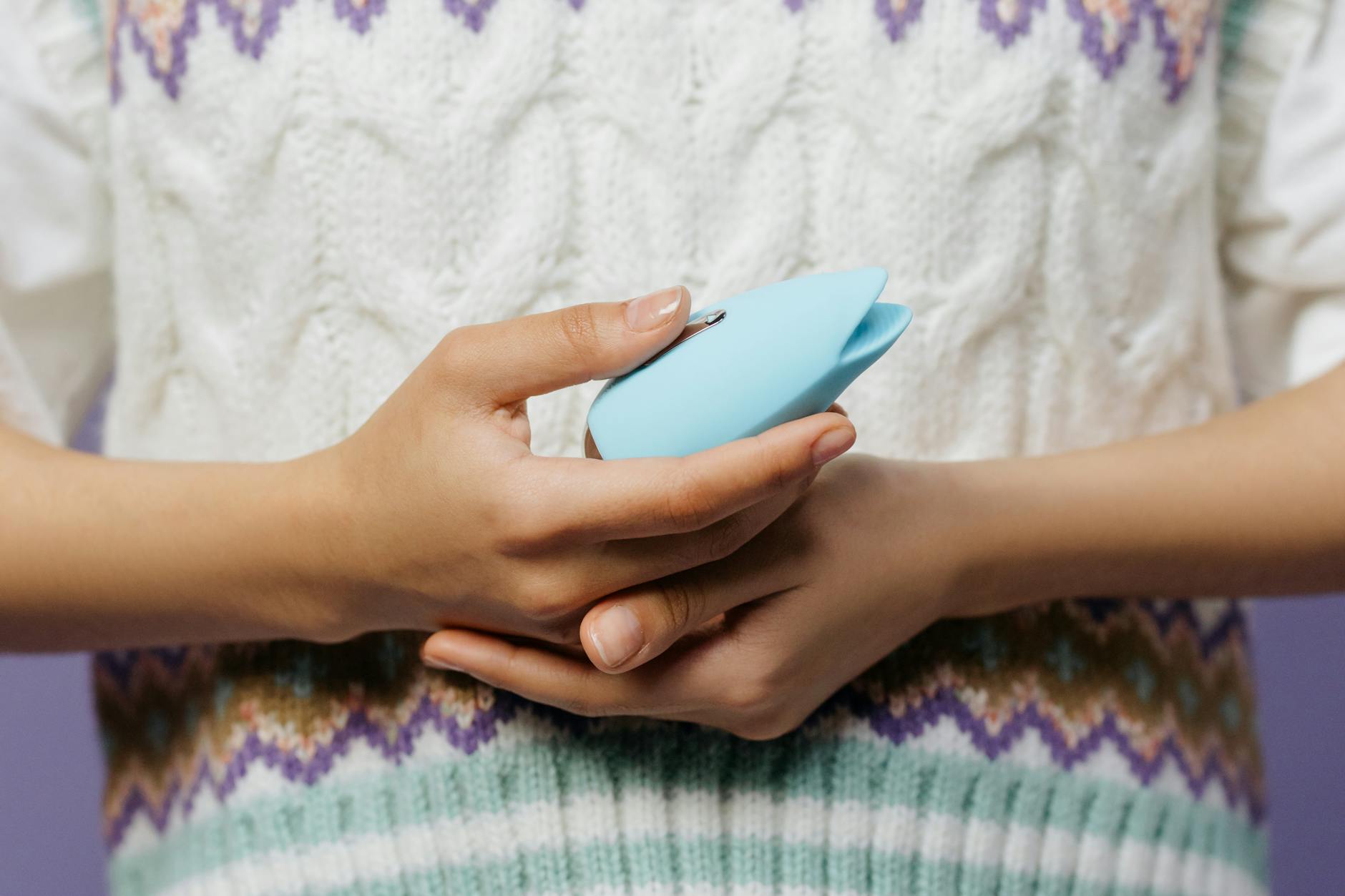
Why Lemon Vibrators Work Better After 40: Sensation Changes Explained
Here's the thing: your clitoris doesn't retire at 40. But the way you feel pleasure through it does shift. This isn't loss. It's recalibration. And understanding that difference is what separates people who think their best years are behind them from people who are just getting started.
Most of what you've heard about sensation changes after 40 is either catastrophizing or cheerleading. "Everything goes numb" or "nothing really changes, don't worry." Both miss what's actually happening, and both miss the chance to find what works better now than it did before.
I've worked with hundreds of people navigating this transition, and the pattern is consistent: when sensation feels different, it's because the nervous system is changing. And when you choose the right tool for that change, pleasure intensifies in unexpected ways.
What actually changes in your nerves and tissue
The clitoris has roughly 8,000 nerve endings. Those nerves don't vanish at 40, 50, or beyond. What changes is the speed and intensity of their firing. Estrogen supports nerve conductivity. As estrogen shifts (whether through natural aging, surgical menopause, or medication), the clitoral nerve network responds differently to stimulation.
This manifests as one of three things:
Stimulation that used to feel sharp now feels softer or more diffuse. A vibration that used to build arousal quickly now requires longer warm-up time. Or sensation comes in waves instead of building linearly. None of these are problems. They're signals that your nervous system is asking for different input.
The tissue also changes. The clitoral glans and labia minora contain estrogen receptors. As estrogen levels shift, tissue becomes slightly thinner and more sensitive to direct pressure. This is why friction that felt good at 30 might feel raw or uncomfortable at 45. Air-suction technology like the lemon sucker design works here because it stimulates without the abrasion of direct contact.
Here's what matters: this is reversible, adaptable, and often leads to stronger orgasms, not weaker ones.
Why air-suction lemon vibrators adapt better than traditional toys
A traditional vibrator moves back and forth or side to side. It works by friction and pressure. That's fine when tissue is thick and resilient. But when tissue becomes more delicate, that same pressure can trigger discomfort before pleasure.
Air-suction technology works differently. Instead of friction, it creates waves of gentle pressure and release. The Lem, a lemon clitoral vibrator from Get Lemon Wand, uses this method. Rather than vibrating against your clitoris, it creates a sucking sensation that stimulates the entire nerve network at once. This is why people often report that air-suction toys feel more powerful than traditional vibrators, even at lower intensity settings.
The mechanism: suction draws tissue into the device gently, then releases. This cycle repeats at your chosen pattern, usually 40-60 times per second depending on the setting. For someone with shifting sensation, this approach bypasses the friction problem entirely and engages deeper nerve clusters that often feel more responsive after 40.
The patterns that work best when sensation feels different
After 40, your nervous system often prefers patterns over constant stimulation. This is why devices with multiple intensity levels and pulsing modes outperform single-setting toys.
Here's what I typically recommend:
Start with the lowest pulsing pattern, not the lowest intensity. A pulse (even on level 1) tends to feel more engaging than steady suction because it creates that wave pattern your nervous system is tuned for now. Once you find a pattern that resonates, you can nudge the intensity up. Many people find they actually need lower intensities than they did at 30, but the sensation feels richer because of the pattern.
Experiment with directional changes. After 40, angling the device slightly or moving it in small circles often produces sensations that pure vertical pressure used to give. Your anatomy has shifted slightly, and the nerves respond better to approach from different angles.
Longer warm-up windows. Arousal takes 15-25 minutes to build fully, and that's not a decline. It's your nervous system asking for what it actually needs to engage fully. Use that time. Start exploring at lowest intensity, stay there for several minutes, let sensation accumulate. Many people report that orgasms reached this way are more full-body and longer-lasting than the quicker ones from their 20s.
Why you might feel less sensation and what actually helps
If sensation feels numb or muted compared to five years ago, here are the three most common causes and what actually fixes them.
Habit numbing. If you've used the same toy the same way for years, your nervous system stops registering it. Switch devices, switch patterns, or take a two-week break. Sensation often roars back.
Stress and pelvic floor tension. Chronic stress tightens the pelvic floor, which reduces nerve responsiveness. This is fixable with breathing work (5-10 minutes of deep belly breathing before solo time), pelvic floor relaxation exercises (reverse Kegels), and toys that don't require intense pressure to engage. Air-suction lemon vibrators shine here because they work even with a tight pelvic floor.
Medication side effects. SSRIs, blood pressure meds, and antihistamines can dull sensation. This isn't permanent. Talk to your doctor about timing (taking meds at night instead of morning) or switching medications. In the interim, air-suction devices work better than vibration for most people on these meds because the sensation pathway is different.
If numbness persists beyond a few weeks, see a gynecologist or pelvic health specialist. Genitourinary syndrome of menopause (GSM) is real and treatable with topical estrogen. Genital sensation changes can also signal circulation issues or neuropathy. Get it checked.
The role of desire and context in sensation changes
Here's what almost nobody talks about: sensation changes after 40 often correlate with context shifts, not just physiology. Your brain's role in pleasure doesn't shrink. It expands.
If you've spent 20 years having sex primarily to please a partner or perform within a certain timeframe, stepping into solo exploration after 40 can feel revelatory. Desire might feel less automatic, but when it shows up, it's because you want it, not because hormones are pushing you. That mental shift alone changes how sensation registers.
Similarly, life stress accumulates. Career demands, aging parents, relationship conflicts, body changes. All of that lives in your nervous system. When you address the stress piece, sensation often normalizes without any physical changes at all.
This is why the context matters as much as the toy. A lemon vibrator works better when you're not checking your phone. Arousal builds better when you've had an hour of quiet to yourself. Pleasure registers more intensely when you're not performing or measuring yourself against past versions.
When to see a specialist about sensation changes
Sensation shifts are normal after 40. Sudden complete numbness or pain is not. If you experience any of these, schedule a visit:
Complete loss of sensation in the clitoral area or labia. Sudden onset pain or burning during or after stimulation. Sensation that's one-sided (only one side of the clitoris feels responsive). Numbness paired with other symptoms like tingling, weakness, or loss of temperature sensation elsewhere on your body.
These can signal hormone imbalances, nerve issues, or vascular changes that need professional evaluation. Get it ruled out.
Making the switch from traditional vibrators to lemon suction toys
If you've used traditional vibrators for years and are considering a switch, here's what to expect.
Weeks one through three: The sensation feels completely different. Suction might feel odd if you've only known vibration. Give it time. Your nervous system is learning a new input pattern. Most people report that this adjustment phase ends with a realization: "Oh. I think I actually prefer this."
Weeks three through eight: You'll likely discover sweet spots you didn't know you had. The suction stimulates deeper nerve clusters that traditional vibration might miss. Intensity settings that would feel intense with a vibrator feel just right with suction. Patterns that seemed pointless become your favorites.
After eight weeks: Most people report stronger, longer orgasms. Sensitivity often increases paradoxically. By not relying on friction, you've given sensitive tissue time to recover, and sensation deepens.
The lemon vibrator design, specifically, works well for this transition because the smaller contact area gives you precision. You can target the clitoral glans directly or angle it to stimulate the entire clitoral complex. That control matters when you're relearning what your body wants.
A quick note on lube and sensation after 40
After 40, your natural lubrication may be lighter. This doesn't mean you can't achieve arousal. It means external lubrication becomes practical, not optional.
Use water-based lube with air-suction toys. Silicone lube can interfere with the seal the device needs to create suction. A water-based option keeps things comfortable and maintains the suction seal.
Lube also changes the sensation in useful ways. It reduces friction, which means the toy can stimulate the entire vulva without irritation. Many people find sensation feels richer with lube because the tissue itself is more comfortable.
FAQ: Sensation changes and lemon vibrators after 40
Why does sensation feel less intense but orgasms stronger after switching to a lemon suction toy?
Air-suction devices stimulate a broader nerve network than direct pressure does. You might feel less intensity at the point of contact but more total nerve engagement. This often translates to full-body orgasms rather than localized ones, which people experience as stronger even if the peak moment feels softer.
Is it normal for arousal to take longer after 40?
Completely normal. Arousal speed isn't a measure of desire. It's a measure of how long your nervous system needs to shift into parasympathetic mode. After 40, that window often stretches to 15-25 minutes. This isn't loss. It's deeper engagement. Many people find that taking this time leads to more satisfying arousal than the quicker responses they had before.
Can I use a lemon clitoral vibrator if I have hormone-sensitive skin or vulvodynia?
Yes, with care. Silicone is the least reactive material for sensitive vulvas. The Lem is silicone, so it's a good choice. Start with lowest intensity and shortest sessions to see how your body responds. If you have active vulvodynia, see a pelvic health specialist before introducing any new toy. Light suction often works better than pressure for vulvodynia, but individual variation is huge.
Do I need to use a lemon vibrator differently in my 50s than my 40s?
Mostly no. The principles stay the same: longer warm-up, pattern over intensity, lube. The one variable is that sensation may continue to shift. What works at 42 might need tweaking at 52. Stay flexible. The nice thing about air-suction toys is that their adjustability makes those tweaks simple.
Why do lemon adult toys feel more intense than higher-powered traditional vibrators?
It's about the stimulation pathway, not raw power. Traditional vibrators rely on friction and penetration of pressure waves into deeper tissue. Suction works differently. It engages the entire clitoral network simultaneously. For many bodies, especially after 40, this broader engagement registers as more intense even at lower power settings.
Can sensation changes after 40 be a sign of something medical?
Sometimes. Sudden, complete numbness or pain warrants a doctor's visit. Gradual sensation shifts are almost always normal physiology. But if changes are paired with other symptoms (fatigue, weight changes, mood shifts, tingling elsewhere), get a checkup. Thyroid, blood sugar, and hormonal imbalances can all affect genital sensation.
The reframe: sensation changes as expansion, not loss
Here's what I tell everyone who's worried that pleasure is fading after 40: you're not losing sensation. You're graduating to a different kind of sensitivity.
At 25, you might have felt stimulation sharply and quickly. At 45, you feel it more textured, more layered. One isn't better. They're different. And when you choose tools that match where your body is now, that difference becomes an advantage.
A lemon vibrator, a lemon suction toy, air-pulse clitoral vibrators. These work because they meet your nervous system where it is now, not where it was. Your body at 45 knows things it didn't know at 25. Your pleasure can too.
Ready to explore what works for you now? Get in touch if you want to talk through which lemon adult toys might suit your body best.