Let's name what's actually happening
Your partner isn't threatened by a piece of silicone. They're threatened by what they think it means. A lemon vibrator, to someone who's nervous, feels like evidence that they're not enough. That their hands, their body, their effort doesn't satisfy you. It's not rational. It's also completely understandable.
This is one of the most common conversations I have with couples in my practice, and I want to be clear: this resistance isn't a character flaw. It's a wound. Usually a very old one about performance, desirability, and whether they matter.
Why partners fear sex toys more than you'd think
Most people grow up with a specific story about sex. In that story, a partner's pleasure is proof they did good. It's how they know they're attractive, capable, wanted. A vibrator rewrites that story. Suddenly there's an object that does something their body can't do, reaches something their fingers won't reach, delivers something their effort might not deliver.
From the outside, that sounds silly. A toy is just a tool. But inside that fear is a much bigger question: if you need something I can't provide, what does that say about me?
Add to that the quiet belief many people carry that real pleasure should happen "naturally," without assistance, and you've got a partner who's not just worried. They're confused about what it means if toys are involved.

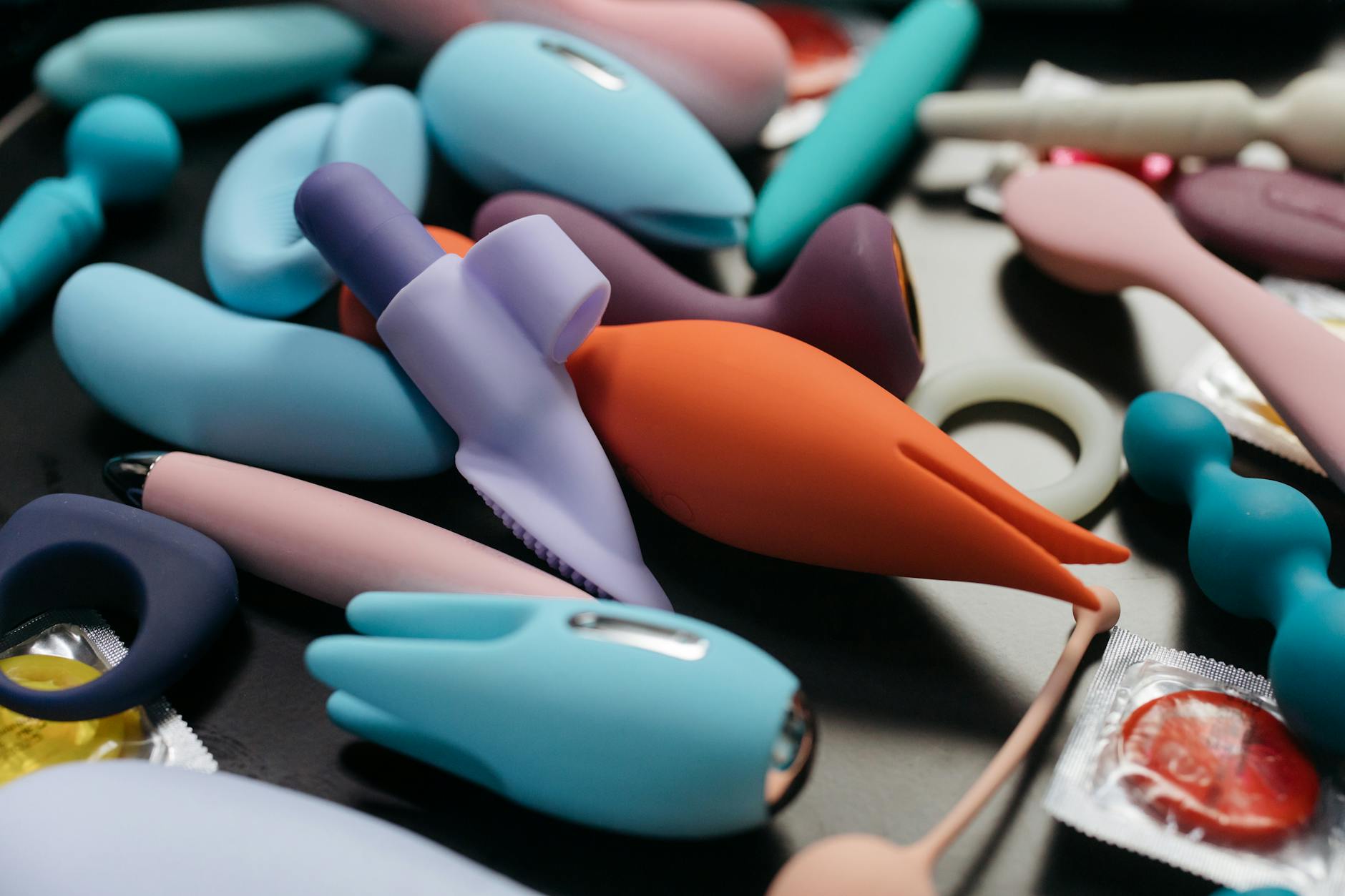
Photo by cottonbro studio on Pexels
The conversation you need to have before introducing a lemon vibrator
This is not a moment to pull out the toy and hope they get it. This is a moment to sit down without pressure, without the toy in the room, and talk about what's actually scaring them.
Start here: "I want to try something new for my pleasure, and I want you to understand what that means and what it doesn't mean."
Then listen. Ask what worries them. Don't defend yourself yet. Just hear it. Your partner might say: "I feel like I'm not enough." Or: "Does this mean you don't like how I touch you?" Or: "I think real sex shouldn't need toys." Write these down mentally. They're the actual conversation you need to have.
Then say this, and mean it: "A lemon vibrator doesn't replace you. It does something different. It's like saying I want a massage doesn't mean your hugs are bad. They're just different things. This doesn't change how I feel about you or how I want to be with you."
The magic word here is "different." Not "better." Not "in addition to." Different.
Reframing the toy as connection, not replacement
Here's what changes the dynamic for most couples: showing them that the toy can be part of sex together, not a substitution for it.
Instead of: "I'm going to use this alone, and maybe you can leave the room."
Try: "I want to use this during sex with you. I want you to see how I respond to it. I want you to be part of this."
This flips the entire narrative. Suddenly the toy isn't evidence of your dissatisfaction. It's an invitation into your pleasure.
When you introduce a lemon clitoral vibrator during partnered sex, your partner gets to watch what brings you joy. They see your face, hear your breath, feel your body respond differently. They become part of the experience instead of being replaced by it. That's a completely different story.
The first time using it together
Set expectations beforehand. Tell your partner exactly what you're thinking: "I want to try using this while we're together. You don't have to do anything. I just want you here. We can go slow, and if it feels weird, we stop."
Start with your partner inside or touching you, then bring the vibrator in. The combination of their presence and the toy's sensation creates something neither could do alone. That's the evidence you need your partner to feel.
Or try this: have them hold the toy. Let them control the pattern, the intensity, the placement. Suddenly they're not replaced. They're empowered. They're directing your pleasure. Many partners find this shifts their entire relationship to the toy.
If they're still hesitant about touch, use the lemon vibrator for clitoral stimulation while they focus on other areas. Your partner can be inside you while you use the vibrator externally. They're still the main event. The toy is support, not the main attraction.
Addressing the "real sex" myth
Your partner might say something like: "I thought sex was supposed to feel natural. Without needing help."
This deserves a real answer. Real sex is whatever brings both people pleasure and connection. Full stop. Millions of people use lemon sexual toys, and their sex is not less real. It's different. It's often better.
Here's what I tell couples: glasses don't make vision less real. They make it clearer. Toys don't make sex less real. They make sensation more accessible.
Some bodies have friction preferences that fingers can't meet. Some nervous systems respond to vibration patterns that hands can't sustain. Some people need external clitoral stimulation while experiencing internal sensation. None of that is a failure of "natural" sex. It's just anatomy.
If your partner is stuck on this idea, ask them: "What makes sex real to you? Is it because I feel good, or is it because you're the one making me feel good?" That question usually clarifies the actual wound underneath.
When your partner wants to watch you use it alone
Some partners who are initially threatened eventually become curious. They want to watch you use the lemon vibrator solo. This is actually a beautiful moment. You're giving them access to your pleasure in a way that doesn't require them to perform.
If you get here, take it seriously. Tell your partner what you're thinking, what you're enjoying, what feels good. Make it sensual but real. You're not performing for them. You're sharing with them. That's wildly different.
Many couples find this becomes its own kind of foreplay. Your partner watches, they learn what turns you on, what patterns you prefer, what brings you to orgasm. Then they use that knowledge in partnered sex. The toy became a bridge to deeper understanding.
Rebuilding trust after toy resistance
If your partner has been really resistant, and you're finally getting somewhere, don't rush. Use the lemon vibrator with them maybe twice a month at first. Let them adjust. Let them see that nothing changes. Your desire for them doesn't shift. Your relationship doesn't shift. The toy is just there sometimes.
After a few months, most partners relax. They realize the toy didn't destroy anything. It often made sex better. Their fear was about a story they were telling themselves, not about what actually happened.
This is relationship work disguised as sex toy work. You're not really solving a toy problem. You're solving a trust problem, a belief problem, a fear problem. The lemon vibrator is just the vehicle.
When they stay resistant
Sometimes a partner stays resistant. That's worth paying attention to. It might mean they need more time. It might mean they need professional support to work through performance anxiety. It might mean this is part of a bigger pattern of control in the relationship.
If your partner absolutely won't budge, and you've had the conversation, and you've offered compromise, then you get to make a choice about what you need. Your pleasure matters. Your agency matters. You get to decide if this is a dealbreaker.
Many couples find that working with a therapist helps here. A neutral third party can validate your partner's fear while also helping them see that your pleasure is not a threat to them. Sometimes hearing it from someone outside the relationship makes it land differently.
Moving forward together
The beautiful part of this conversation, when it goes well, is what happens on the other side. Your partner learns that your pleasure is separate from their performance. You learn that you don't have to shrink your needs to keep your partner comfortable. You both learn that vulnerability and honesty about sex create more intimacy, not less.
A lemon vibrator becomes just a tool you use sometimes. But the conversation you had to get there? That's the real shift. That's what deepens the relationship.