
The frequency mismatch is real
Let's be real: one of you wants to feel the buzz, and one of you finds high-frequency vibration either overwhelming, uncomfortable, or just plain boring. This isn't a small issue. It's one of the sneakiest dealbreakers in couples' pleasure, because neither person is wrong. Your nervous systems are just wired differently.
Here's what nobody talks about clearly. When vibration frequency doesn't match, the person who prefers lower frequency often feels guilty for "needing" something slower. The person who loves intensity feels frustrated that they can't enjoy their toy fully. Both people end up disappointed, and the lemon vibrator sits unused in a drawer.
But lemon vibrators are actually exceptional for this particular mismatch, and here's why it matters.
Why frequency preference varies between partners
Vibration sensitivity is not about being "more sensitive" or "less sensitive" in a judgment way. It's neurological. Some nervous systems respond best to rapid pulses (high frequency, typically 80+ Hz). Others respond best to slower, deeper waves (low frequency, 20-40 Hz). Some people prefer a pulsing pattern instead of continuous vibration entirely.
Your preference can shift based on arousal level, stress, hormones, and what your partner is doing at the same time. Someone who loves fast vibration solo might find it overwhelming during partnered sex. Someone who finds 80 Hz too intense might discover that 40 Hz feels incredible when combined with penetration or manual touch.
The problem with most vibrators is they're built for one frequency. High-frequency devices feel great for someone chasing that rapid-fire clitoral stimulation but feel like a jackhammer to someone who prefers gentler waves. Low-frequency vibrators feel perfect if that's your sweet spot but leave the high-frequency person wanting more punch.
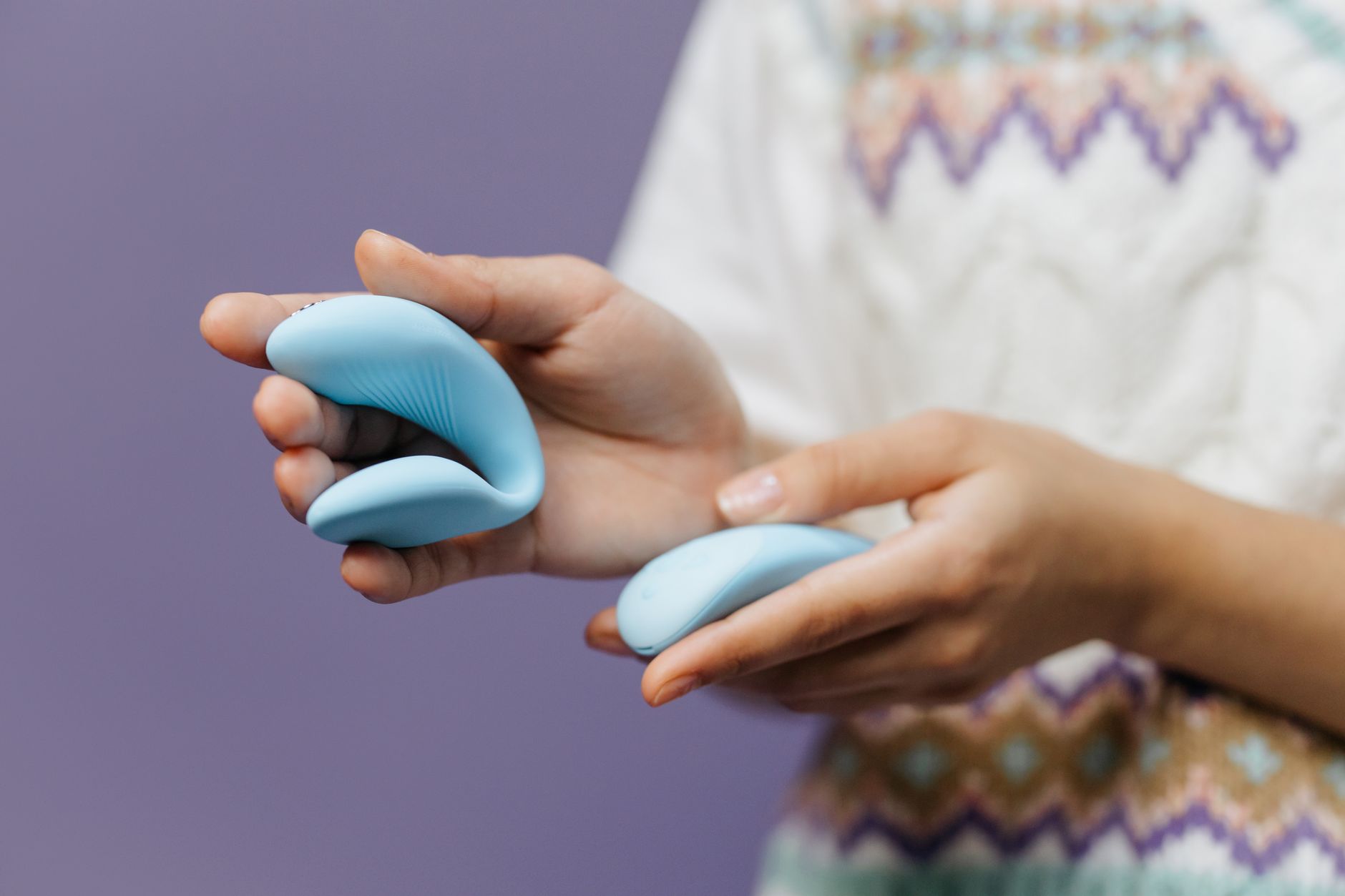
Photo by cottonbro studio on Pexels
Lemon vibrators deliver deeper, more sustained waves rather than rapid buzzing, which means they're already starting in a frequency band that feels more accessible to people who find intense vibration exhausting.
How lemon vibrators actually feel different
The suction-and-pulse mechanism of a lemon clitoral vibrator works on a fundamentally different principle than a standard vibrator. Instead of a motor vibrating in place at a fixed frequency, you're getting a rhythmic suction combined with subtle pulsing. That creates a sensation that feels closer to 30-50 Hz for most users, rather than the 80-100+ Hz of buzzy vibrators.
For the partner who dislikes high frequency, this often feels like the first time they're actually enjoying vibrator play. It's not jarring. It's not numbing. It's rhythmic in a way that feels more connected to your body.
For the partner who loves intensity, lemon vibrators offer something different: a more concentrated sensation that doesn't numb tissue the way sustained high-frequency use can. Many couples report that they actually feel deeper, more satisfying sensations together when using a lemon vibrator than they did chasing the buzz with a traditional vibrator.
Setting realistic expectations before you start
Here's what I tell couples in my practice: you're not trying to make your partner like what you like. You're finding something you both like better.
That reframing matters because if the partner who prefers low frequency approaches it as "I'm compromising," resentment builds. If the partner who loves intensity approaches it as "I'm settling," disappointment follows. Instead, think of it as discovery. You're trying a different sensation together.
Before you introduce the lemon vibrator into partnered play, have a conversation that's separate from sex. Not in the bedroom, not in the moment. Sit down and say something like: "I want us to find something we both actually enjoy. I know we have different frequency preferences. I found this thing that might feel good to both of us. Want to try it?"
Then set a specific expectation: you're not looking for earth-shattering orgasms. You're exploring what the sensation feels like together. That takes pressure off both people.
The practical intro to using a lemon vibrator as a couple
Start with external play only. Build arousal together first through kissing, touch, whatever your foundation is. Once you're both warmed up and receptive, introduce the lemon vibrator on the vulva externally, starting at the lowest setting.
The person who prefers lower frequency should hold the lemon vibrator or guide it. This serves two purposes: it gives them control, which makes the experience feel less overwhelming, and it lets the partner receiving stimulation relax into the sensation instead of bracing for something intense.
Spend time exploring patterns. The rhythm of suction and pulse creates patterns naturally, but you can also manually vary pressure and positioning. Let the receiving partner give feedback in real time: "Lighter," "Stay there," "Try side to side."
This is the critical part: the partner who loves intensity often gets impatient at this stage. They want to ramp it up. Resist that impulse for at least the first few times. What feels subtle and fine-tuned on the lower setting might become intense when combined with your partner's arousal building over 10-15 minutes. You might find that you both discover something you actually prefer.
Combining it with other touch to match frequency preferences
Here's a technique that works exceptionally well for mismatched couples. While using the lemon vibrator externally, the other partner can provide additional touch through penetration, internal massage, or hand play. This layering allows each person to contribute at their own frequency preference.
Say the receiving partner loves lower frequency but wants some internal sensation. You use the lemon vibrator externally at its natural, lower-frequency pulse, while the other partner moves inside them at whatever pace feels good to them. The combination feels richer, more complex, and less one-note than either sensation alone.
Or the opposite: the partner who loves intensity can use their hands or a different toy for deeper internal work while the lemon vibrator handles the clitoral sensation at its own rhythm. This prevents the pressure to make one toy do everything.
When to acknowledge this still might not work
Let's be honest. Sometimes frequency mismatches are actually about something else. Sometimes the partner who rejects vibration is expressing something deeper: anxiety about toys, fear that you prefer them to your partner, grief that sex has changed, or just a mismatch in desire itself.
If you introduce the lemon vibrator and the resistant partner still rejects it, don't push harder with a different toy. That's a signal to have a bigger conversation. The mismatch might not be about frequency at all. It might be worth exploring whether how to introduce a lemon vibrator to your partner without creating tension gets at a deeper resistance that needs addressing first.
Similarly, if the person who loves intensity finds that even the lemon vibrator doesn't satisfy them, that's useful information. Some people genuinely need higher-frequency stimulation. That's not a problem. It just means you need a different solution. Maybe that's using the lemon vibrator for partnered play while keeping a higher-frequency toy available for solo use.
The communication during and after
This is the part couples skip and regret. Right after you try the lemon vibrator together, talk about it. Not a performance review, just observations.
"That felt really different to me." "I liked how that didn't make me feel numb." "That rhythm was kind of nice." "I still want something buzzer, but that was good."
Use what you learn. If the receiving partner loved it, plan to use it again. If they had feedback on placement or pressure, adjust. If the inserting partner felt disconnected, figure out what would help them stay engaged.
Many couples find that after three or four tries, a lemon vibrator becomes part of their routine not because it's a compromise, but because it actually works better for both people than what they were doing before. Frequency preference doesn't disappear, but it stops being a barrier.
FAQ: Frequency mismatches and lemon vibrators
Can I adjust the frequency on a lemon vibrator?
Most lemon vibrators have variable intensity settings. While they're designed to deliver a lower, more sustained frequency, you can increase the depth of the pulse at higher settings. This won't turn it into a high-frequency buzzer, but it can intensify the sensation for partners who want more "oomph."
What if my partner thinks anything vibrating is too intense?
That's different from frequency preference. If vibration itself feels overwhelming, the lemon vibrator might still work because the suction sensation is distinct from vibration. Many people who find traditional vibrators uncomfortable can tolerate or even enjoy the rhythm of a lemon clitoral vibrator. Start at the lowest setting and let them control pressure entirely.
Can we use a lemon vibrator with other toys at the same time?
Absolutely. The lemon vibrator's lower frequency profile actually pairs beautifully with other sensations. You can use it with a penetrative toy, with hand play, or even with a partner's mouth. The combination often feels more interesting than either sensation alone.
Is a lemon vibrator good for someone who's never used vibrators before?
Yes, actually. Because the frequency isn't jarring and the sensation is more rhythmic, lemon vibrators are gentler entry points for people new to vibration. If your partner is hesitant about traditional vibrators, the lemon vibrator is worth trying first.
Do I need lube with a lemon vibrator during partnered play?
Water-based lube helps the vibrator glide smoothly and reduces friction on the vulva, especially during longer play. It also increases sensation by reducing resistance. Apply a small amount to the lemon vibrator or directly to the vulva before starting.
What if we use the lemon vibrator during partnered sex and my partner loses their erection or engagement?
This happens. Sometimes the presence of a toy changes the dynamic or the receiving partner gets too focused on the vibrator to stay connected to their partner. If that happens, pause, talk about it, and try incorporating the vibrator differently. Maybe it works better for foreplay instead of during penetration. Maybe the inserting partner needs to be actively using it rather than watching. Adjust the structure, not the tool.
Finding your frequency match takes exploration
Frequency preference isn't a fixed personality trait. It shifts with arousal, stress, what you had for breakfast, your hormone cycle, and how connected you feel to your partner in that moment. The lemon vibrator works for mismatched couples because it enters the conversation at a frequency that's often more accessible to people resistant to traditional vibration while still offering satisfaction to people who love intensity.
The goal isn't to make your preferences identical. It's to find something that works better for both of you than settling alone or skipping partnered pleasure altogether. That's always worth the experiment.