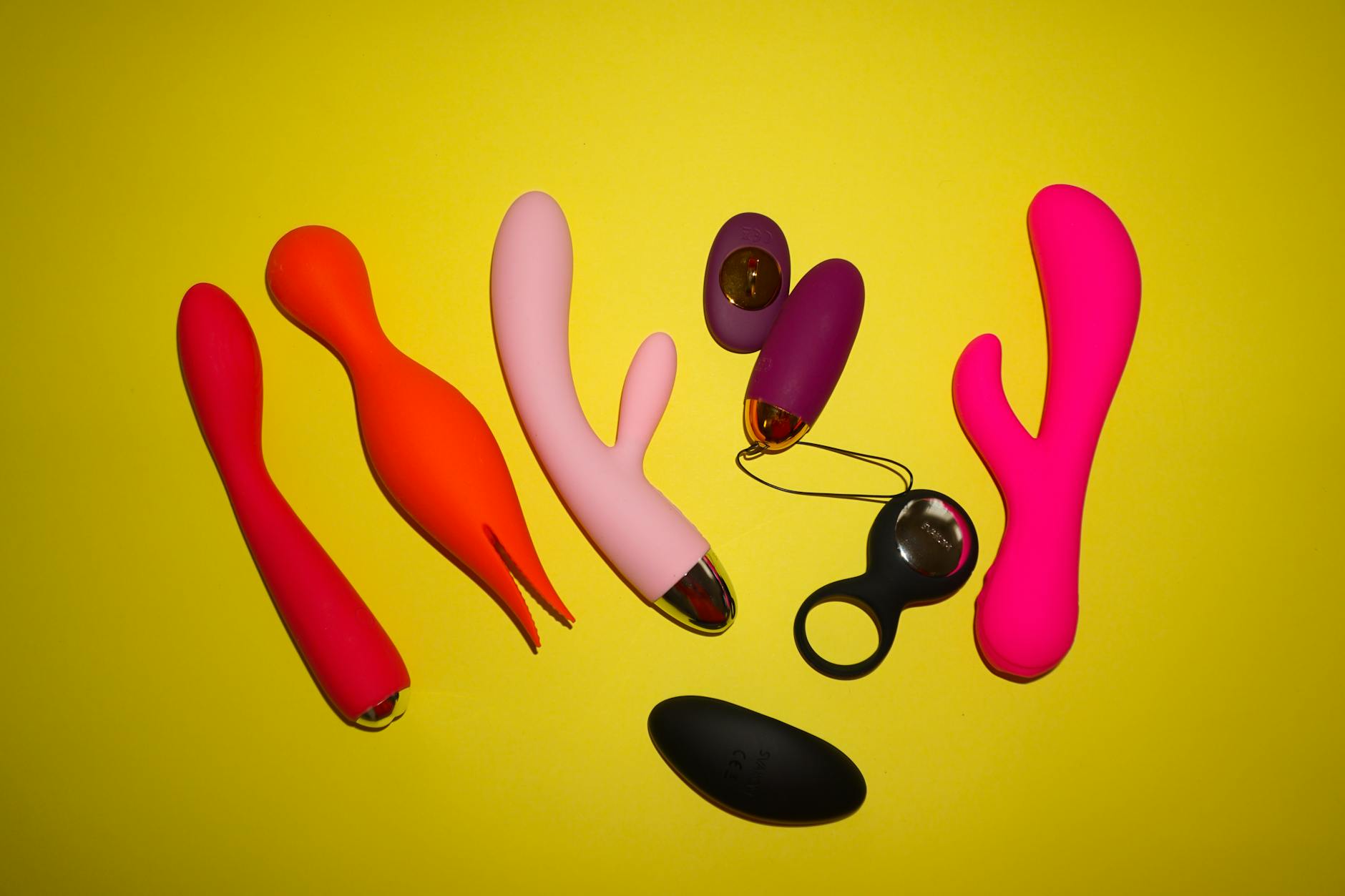
Here's the thing about vibration intensity
When someone tells you they "can't use" a vibrator because it feels too strong, what they often mean is that the vibration available to them overwhelms rather than excites them. This isn't a sign that vibrators aren't for you. It's a sign you haven't found the right entry point yet. The solution isn't to white-knuckle through discomfort—it's to use lemon vibrators strategically and rebuild your capacity at your own pace.
This happens more often than you'd think, especially if you're returning to pleasure after a break, recovering from numbness, or if your nervous system runs hot.
Why vibration can feel like too much
Three things are usually at play.
Sensitivity variation across your body. The clitoris has thousands of nerve endings, but not all of them cluster the same way. Some people have dense clustering that responds intensely to any vibration. Others have learned, over years of a particular touch pattern, to expect a certain cadence—and anything faster or more direct creates a jolt rather than pleasure.
Anticipatory tension. If you're bracing for intense sensation, your pelvic floor tightens, your nervous system goes into slight alert mode, and vibration reads as invasive instead of invited. This feeds on itself: the more you expect it to be too much, the more too much it becomes.
Novelty shock. Lemon clitoral vibrators work through suction-based stimulation rather than traditional vibration. If your body has only ever experienced direct buzzing or friction, a lemon vibrator's sensation profile can feel alien at first, which can read as overwhelming even when the intensity is actually moderate.
Start lower than you think you need
The Lem and other lemon sucker toys have multiple intensity settings for a reason. Here's the non-obvious part: the lowest setting on most clitoral vibrators is often stronger than people expect. This is by design—manufacturers assume you're coming in with previous experience.
If you're new to this or rebuilding tolerance, ignore the lowest setting being "designed for everyone." Start at the pattern settings (many lemon vibrators have pulsing patterns separate from intensity levels). These offer stimulation without the full force of continuous suction.
Spend three to five sessions at this level before moving up. Your nervous system needs time to learn that this sensation is safe, pleasurable, and something you can control.
Create physical distance and indirect contact
Direct contact with the clitoris isn't the only way to experience pleasure—sometimes it's actually the obstacle.
If direct stimulation feels overwhelming, try these adjustments:
- Place the lemon vibrator's opening against the hood of the clitoris (the skin covering it) rather than the glans itself. This filters sensation through the tissue, dramatically reducing intensity while maintaining pleasure.
- Apply it at an angle rather than straight-on. Angled contact distributes pressure differently and can feel gentler.
- Use it through fabric first. A thin underwear layer or even a soft cloth between you and the device creates a buffer while you're acclimating. Yes, this sounds like starting small—that's exactly the point.
- Keep it moving slowly across the area rather than static. Constant movement prevents desensitization while keeping intensity manageable.
None of these feel like "cheating." They're all legitimate techniques that professional sex educators recommend when intensity is the issue.
Lubrication changes everything
This is the detail people skip and then regret.
Water-based lubricant—especially a thicker, silicone-hybrid formula—acts as a sensation buffer. It reduces direct friction and allows the toy to glide rather than suction intensely. This is why lube isn't just for comfort. It's a tool for controlling how much stimulation reaches your body.
Add more than feels necessary. Generosity here is your friend. A well-lubricated session feels softer, more forgiving, and gives you better control over intensity because the toy can move more freely instead of pulling directly on tissue.
Build tolerance gradually through microdosing pleasure
Here's what I tell clients who find vibration overwhelming: start with micro-sessions.
Set a timer for two to three minutes. Turn on the lowest setting or pattern mode, apply the lemon vibrator with indirect contact (hood rather than glans), use plenty of lubrication, and stop when the timer goes off. Not when you're close to anything. Stop while pleasure is still building.
This trains your nervous system in several ways at once. It teaches you that vibration doesn't have to lead somewhere. It reduces the pressure to "perform" or achieve anything. And it lets you explore sensation in small, controlled doses before your nervous system signals overwhelm.
Do this for one to two weeks. Then extend to five minutes. Then ten. You're not trying to reach an endpoint—you're rewiring how your body interprets the sensation.
Separate sensation exploration from pressure to respond
When pleasure feels overwhelming, it's often tangled with performance anxiety. You're waiting for your body to do something (arousal, orgasm, response), the toy feels intense, and suddenly that intensity reads as a threat instead of pleasure.
One way to untangle this: approach the lemon vibrator purely as sensation exploration with zero agenda. No expected outcome. No goal. Just: "What does this feel like against different parts of my body? How does the sensation change if I adjust the angle? What happens if I breathe differently?"
This reframes the tool from "something that's supposed to make me feel good" (which can create pressure) to "something I'm curious about." Curiosity and overwhelm can't exist in the same nervous system state.
Know when to pause and when to push through gently
There's a difference between "this feels intense and I'm learning to tolerate it" and "this feels invasive and unsafe."
Tolerable intensity: you can breathe, you notice pleasure under the intensity, you feel in control, and slowing down makes it better.
Invasive sensation: you feel tension in your jaw or shoulders, you're holding your breath, you want it to stop immediately, and slowing down doesn't help.
If you're in the second state, stop. This isn't something to push through. Discomfort builds aversion, which makes the next session harder. Instead, try a lower intensity next time or take a few days off. Your capacity will increase faster if you stay in the "tolerable but learning" zone than if you regularly hit "this is too much."
Breathing matters more than you realize
When people tense up around intense sensation, they unconsciously hold their breath. This tightens the pelvic floor and makes everything feel more overwhelming.
Before using a lemon vibrator, establish a breathing pattern. Slow inhale through the nose (4 counts), slow exhale through the mouth (6 counts). Do this for two minutes before you even turn the device on. Then maintain it throughout.
Breath control is one of the fastest ways to dial down your nervous system's threat response. If you notice yourself holding your breath during stimulation, pause, reset your breathing, and resume. You're not failing. You're learning your body's signals.
Consider whether numbness is part of the picture
Sometimes what feels overwhelming is actually your nervous system overcompensating for numbness.
If arousal takes longer to build or sensation feels muted, your body might crank up intensity sensitivity as a counterbalance. This creates a weird state where stimulation feels too strong even though you technically need strong stimulation to feel anything.
If this resonates, the solution isn't to push through intense sensation. It's to rebuild baseline sensation gradually using the microdosing approach above, plus longer warm-up time before introducing the lemon vibrator at all.
When you're ready to experiment with a partner
If overwhelm has made you hesitant about using toys with someone, reframe the conversation with your partner.
Instead of "vibrators are too intense," try: "I'm learning what intensity level works for my body right now, and it's different from what I expected. I'd like to explore this with you, starting slow."
A partner who's supportive will help you explore gradually. They can apply the toy at different angles, adjust speed, manage lubrication, and take cues from your breathing and body language. This collaborative approach often makes overwhelm disappear because the pressure shifts from you performing to you two discovering together.
If your partner resists this framing or thinks toys are threatening, that's a different conversation—but it's not about the vibrator. It's about alignment on pleasure and exploration.
FAQ: Overwhelming vibration, answered
Can my body ever adapt to higher intensity if I start low?
Yes. Neural plasticity means your nervous system can absolutely learn to tolerate and enjoy higher intensities over time. The key is gradual exposure in safe conditions without pressure. Most people who start at the lowest settings or patterns can work up to higher intensities within 4-8 weeks if they're consistent and patient. There's no timeline you "should" be on—your pace is the right pace.
Is it normal to feel pins-and-needles or tingling when I use a vibrator intensely?
Yes, especially if you're new to vibration or your body has adapted to numbness. Tingling often means your nervous system is waking up—it's not dangerous. But if it's painful (different from tingling) or accompanied by numbness after the session, scale back intensity and duration. Some toys or patterns will always be too much for your body, and that's fine.
What if the lowest setting is still too strong?
Try these: use it through fabric or clothing, apply it to the hood rather than the glans, use it at an angle against surrounding tissue instead of directly, or space out your sessions to very short bursts (90 seconds) so your nervous system doesn't go into overload. You can also explore other techniques for pleasure without penetration while you're building tolerance. The lemon vibrator will still be there when your body's ready.
Does lubrication really make that much difference in intensity?
Immensely. Good lubrication reduces friction and changes how suction-based toys interact with your body. It's the fastest way to reduce perceived intensity without changing settings. Start with way more than feels necessary—you can always add more mid-session.
If I find the sensation overwhelming, does that mean I'm broken or abnormal?
No. Sensitivity variation is normal and common. Some people are naturally sensitive to certain stimulus types. Others have learned specific touch patterns and need time to adjust to new sensations. Some have nervous systems that run hot or are prone to overstimulation. None of these mean you're broken. They mean you need a different approach than the default.
How do I know if this is a psychological block or a real physical thing?
Honestly? It doesn't matter as much as you think. Whether the overwhelm is rooted in psychology or physiology, the solution is the same: gradual exposure, breathing, indirect contact, and zero pressure. Work through the technique adjustments above for two weeks. If things shift, great. If they don't, consider talking to a therapist or somatic practitioner who specializes in sexual response—they can help you figure out what's underneath the overwhelm and give you targeted tools.
You don't have to hit the ceiling
Pleasure doesn't live only at maximum intensity. Some of the most satisfying sessions happen at the edges—low settings, indirect contact, long slow exploration with no endpoint in mind. If that's what works for you, that's not settling. That's knowing your body and honoring it.
Start where you are. Go at your pace. The lemon vibrator isn't going anywhere, and neither is your capacity to enjoy it. If you're still navigating what works for your body, reach out—we're here to help you figure it out without judgment.