
Here's the thing about new partners
Your pleasure doesn't start from scratch with someone new. It starts from a completely different nervous system state. The arousal pathway your body built over years with a previous partner, the way touch registered, the speed at which things escalated.all of that rewires when you're learning someone else's rhythm. This isn't failure. It's biology.
Many people interpret this as a sign the new relationship isn't right, or that they've lost something sexually. Neither is true. What's actually happening is that your body is recalibrating to a new nervous system, new hands, new timing, new everything. The sensation you're used to feeling in the first five minutes might take fifteen now. The orgasm that used to be predictable might feel distant or require a different kind of attention. A lemon vibrator becomes invaluable during this recalibration because it gives you back a known sensation while you're learning the new one.
Why sensation changes with a new partner
Three neurological things are happening at once.
First, your brain is still in partial protective mode. Familiarity creates a kind of nervous system safety that allows arousal to flow more easily. With a new partner, even if you feel emotionally comfortable, your amygdala is still running a low-level threat assessment. This doesn't mean danger. It means your nervous system is allocating cognitive bandwidth to novelty rather than pure sensation. That steals from arousal.
Second, every partner's touch is literally different. Pressure, rhythm, speed, the shape of their hands, where they apply focus.all of these micro-variables change the neurological experience of touch. Your body has learned the last person's choreography. Now it's learning a new one, and that learning curve feels like flatness or numbness because the signal isn't traveling the familiar neural pathways.
Third, there's often shame hiding under the surface. You might feel self-conscious that things don't work as seamlessly as they did before. Or you worry that needing more time signals you're not attracted. These thoughts, even if you don't voice them, activate your sympathetic nervous system.the opposite of what you need for pleasure. This is where a clitoral vibrator helps most: it removes the performance pressure because the sensation is reliable and entirely in your control.
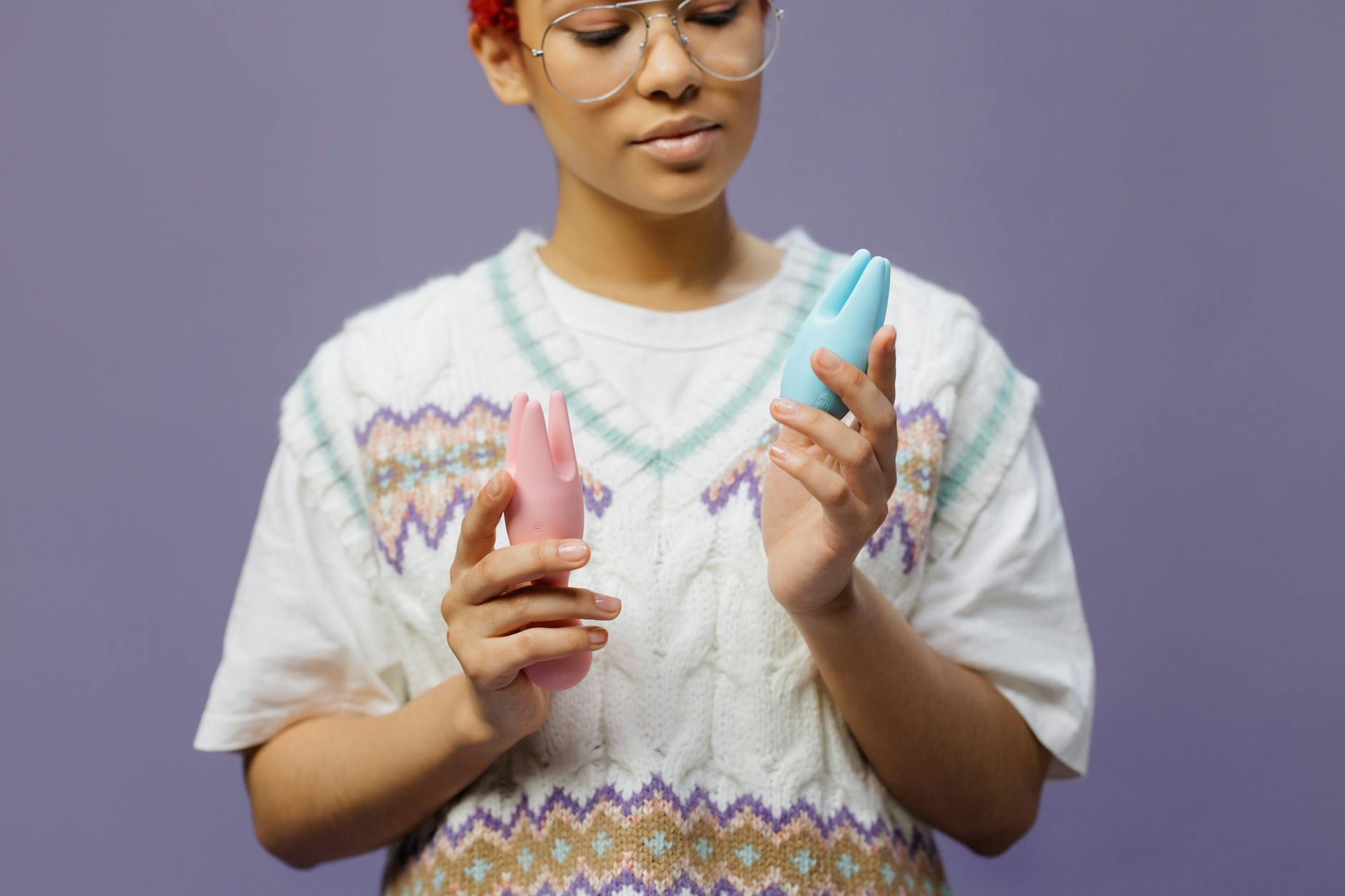
Photo by cottonbro studio on Pexels
How to use a lemon vibrator as a confidence reset
Start solo. Not as an avoidance of your partner, but as a foundation. Spend 2-3 sessions with your lemon vibrator alone, relearning what your body remembers. This does two things. It reminds your nervous system what reliable pleasure feels like, and it gives you permission to be selfish with your own sensation. A lot of people new to a relationship unconsciously monitor their partner's reactions instead of their own body. Using a lemon vibrator privately is permission to stop that.
Pay attention to which intensity patterns actually work for you now. Your sensitivity might have shifted. What felt perfect at pattern 3 six months ago might be overwhelming or disappointing now. This isn't about your partner. It's about recalibrating your baseline. Notice the timing too. Do you need a longer warm-up? Does your clitoris prefer sustained suction or pattern variation? These details matter because they're the vocabulary you'll eventually use with your partner.
Once you've spent time rebuilding that solo connection, introduce the lemon vibrator into partnered pleasure. The suction mechanism of a clitoral vibrator like the Lem works beautifully here because it creates a focused, reliable sensation that doesn't depend on your partner's technique. If their fingers are too light, the vibrator compensates. If you need a break, you control it. If penetration feels unsatisfying but you still want stimulation, the vibrator handles that independently. You're not asking your partner to be something they're not. You're using a tool that fills the gap.
Communication patterns that actually work
Most people say "I think we should use a vibrator" and then panic. Your partner hears "you're not enough" even if you didn't say it. Here's how to reframe it so it lands differently.
Instead: "I'm still learning my body with you, and I want to figure out what actually feels good. I think trying this together might help me relax into things faster." That's honest and it's collaborative. You're not saying something's wrong. You're saying you're in a recalibration phase and you want to move through it together.
If your partner is hesitant, remember that male or masculine partners especially sometimes interpret vibrators as competition rather than partnership. The narrative in their head might be "she needs this because I can't make her come." Head that off by being specific. Say something like: "My pleasure is running slower this time around, and I know it's not about you. I want to speed up the part where I'm comfortable enough to fully relax. This helps that happen." That's not about inadequacy. It's about logistics.
Once you're using the lemon vibrator together, let your partner hold it sometimes. Not to do the work for you, but so they understand what you're responding to. This bridges the gap between what they imagine you feel and what you actually feel. Sensation becomes a shared language instead of a mystery.
The timeline reality
Rebuild your baseline solo: 1-2 weeks of regular solo use.
Introduce the vibrator with your partner: weeks 2-4, starting with foreplay alongside their touch, then gradually making it the center.
Expect recalibration to take 4-8 weeks. That's not forever. That's how long your nervous system needs to trust a new partner's rhythm enough for arousal to flow without obstruction. A lemon vibrator compresses that timeline because it gives you back agency and predictability while you're learning the new landscape.
Some people find that after a few months, they actually prefer using the lemon vibrator with a new partner because the sensation is more reliable than they remember. That's fine. Your preferences aren't fixed. They're responsive to context. New relationships change what works, and sometimes what works is a combination of your partner and a tool rather than a return to how things used to be.
When sensation stays flat
If you're 8 weeks in, using the vibrator regularly, and pleasure still feels muted or you're not building toward orgasm even with the most intense settings, something else might be running underneath. Low desire after starting antidepressants. Unresolved trust issues with this specific partner. Pelvic floor tension from anxiety about the relationship itself.
A lemon vibrator is a brilliant tool for recalibration. It's not a cure for relational dynamics that need actual conversation. If your nervous system is spending energy on doubt or fear about the relationship, sensation will stay flat no matter how good the toy is. That's your body being honest about what you need to address first.
The permission piece
Here's what most people don't name: using a lemon vibrator with a new partner is permission to prioritize your pleasure without guilt. New relationships often come with a performance pressure.a sense that you're supposed to fall into effortless passion right away. That's mythology. Real desire in new relationships often requires tools, communication, and time to rebuild. Using a clitoral vibrator isn't settling. It's being smart about your nervous system and honest about what actually turns you on.
Your pleasure matters as much in month two of a relationship as it did in month two of your last one. Sometimes it takes a lemon vibrator to remember that.
People also ask
Should I use a lemon vibrator on a first time with a new partner?
Not necessarily. A first time is about learning touch and rhythm. You don't have enough data yet to know whether flatness is nervous system adjustment or actual incompatibility. Give yourself 2-4 solo sessions first so you know what your baseline feels like. Then you'll recognize whether the new partner's touch is the issue or whether it's just newness.
What if my new partner thinks I'm using the vibrator because they're not good enough?
That's a conversation worth having directly. Say something like: "My nervous system takes longer to relax with someone new. This isn't about you. It's about me needing to feel secure enough to really let go." If they can't handle that without taking it personally, that tells you something important about whether this person can show up for you long-term. Partners who support your pleasure are partners worth keeping.
Can I use the same lemon vibrator I used with an ex?
Yes, assuming it's clean. A vibrator doesn't carry emotional baggage. The history is in your mind, not in the tool. If using the same one triggers guilt or comparison, that's worth exploring, but there's nothing inherently wrong with it. Sometimes continuity in sensation helps during transition.
How do I know if it's the relationship or just the recalibration period?
Give it 8 weeks. If you're using a lemon vibrator consistently during that time and your arousal is gradually building, that's recalibration. If 8 weeks pass and you still feel zero spark even with the vibrator, that's either a mismatch or unresolved emotional dynamics with this person. Eight weeks is a real data point. Trust it.
What sensation pattern works best for new relationship nervousness?
Start lower. Patterns 1-3 on a lemon vibrator tend to work better than jumping to high intensity when you're anxious. Lower intensity feels less overwhelming and lets you notice micro-sensations instead of just chasing the big ones. As you relax, you'll naturally gravitate toward higher patterns.
Is it normal for my body to respond differently after a breakup?
Completely normal. Your nervous system was trained by the last relationship. It knows that person's touch, rhythm, and presence. With someone new, that's all unfamiliar. It's not that your body broke. It's that it's learning someone else's language. A lemon vibrator gives you a consistent signal while you're decoding the new one.
The bottom line
New partners rewire pleasure. That's biology, not destiny. A lemon vibrator is a tool that helps you move through that recalibration faster and with less performance pressure. Solo use first to rebuild your baseline. Then introduce it with your partner as a collaborative experience. Expect 4-8 weeks for your nervous system to settle. Communicate clearly about what the tool means to you. And remember: prioritizing your pleasure isn't selfish. It's the foundation for everything else.
If you're just starting out with toys or want more guidance on using them with a partner, check out our full buying guide or explore how lemon vibrators work during different phases of your cycle. Every body is different, and so is every relationship. You're doing the work of learning both. That matters.
Resources
For more on relationship dynamics during early stages: Check out our post on how to use a lemon vibrator with a new partner who has never used toys. If nervous system regulation is the issue, we also have guidance on managing pelvic floor tension during relationship stress.