
Here's what you're dealing with
You're aroused. Maybe you've been intimate for a while. But your body feels distant, like you're watching the experience happen to someone else. Touch that should feel electric barely registers. Your partner is doing everything right, but sensation has gone flat.
This isn't uncommon. It's also not permanent. And it's almost certainly not what you think it is.
Why sensation fades during arousal
Let's start with neurology. Your body has two nervous system states: sympathetic (fight-or-flight) and parasympathetic (rest-and-digest). Most people assume arousal lives in the parasympathetic zone. Actually, it starts there but lives mostly in the sympathetic one. Your heart rate rises, your breathing shifts, blood flow redirects to your genitals. This is intentional and healthy.
But here's the thing: when your sympathetic nervous system is in overdrive, your brain downregulates sensation in less critical areas. It's an evolutionary efficiency feature. You need less sensitivity to your arm when you're being chased by a predator. The same mechanism applies during sex, especially if you're anxious, distracted, or pushing to orgasm.
Numbing can also signal that you've hit a plateau. Your body adapted to whatever stimulus you've been using. Steady pressure at the same rhythm for fifteen minutes? Your nerve endings stop reporting "novelty" to your brain. The signals are still firing, but your brain isn't processing them as interesting.
There's also the chemical piece. Alcohol, antidepressants, antihistamines, and certain blood pressure meds can flatten sensation. So can hormonal shifts. And honestly, sometimes your body is just tired. Sleep deprivation alone can numb arousal dramatically.
The lemon vibrator reset
A clitoral vibrator like the Lemon works specifically because it reintroduces novelty and intensity. Here's the practical why:
Vibration operates at a frequency your body hasn't adapted to yet. When you've been using the same pressure from a hand or partner, your nerve endings have settled into a predictable pattern. Introducing rapid, rhythmic stimulation jolts your sensory system back online. It's not rougher or meaner. It's different. And different is what your nervous system is waiting for.
The suction feature of a clitoral vibrator is particularly useful here because it distributes sensation across a broader area of nerve endings at once. Instead of focused pressure in one spot, suction engages multiple sensation zones simultaneously. Your brain receives a richer signal. That signal breaks the numbness.
Practical steps to reset sensation
Start with the break. If you've been intimate for a while and sensation has numbed, pause. Literally stop. Ten minutes away from stimulation resets your baseline. Your nervous system needs that reset. Hydrate. Breathe normally. Let your heart rate drop.
Introduce vibration fresh. Start a solo session or a partnered one with the vibrator at the lowest setting. This matters. Many people default to medium or high intensity, especially if they've tried vibrators before and felt nothing. Low setting on a quality lemon clitoral vibrator is still more novel input than you've been receiving. Your body will register it.
Layer in rhythm changes. Don't use the same pattern for more than ninety seconds. Alternate between intensity levels. Try pattern one for thirty seconds, switch to pattern two for thirty seconds. This rhythm variation prevents re-adaptation. It keeps your nervous system engaged.
Use it during partnered sex, not instead of it. If numbness happens during partnered intimacy, introduce the vibrator as part of that experience, not a replacement. A partner can apply it while inside you or while you're in a position together. This addresses the numbness while maintaining connection.
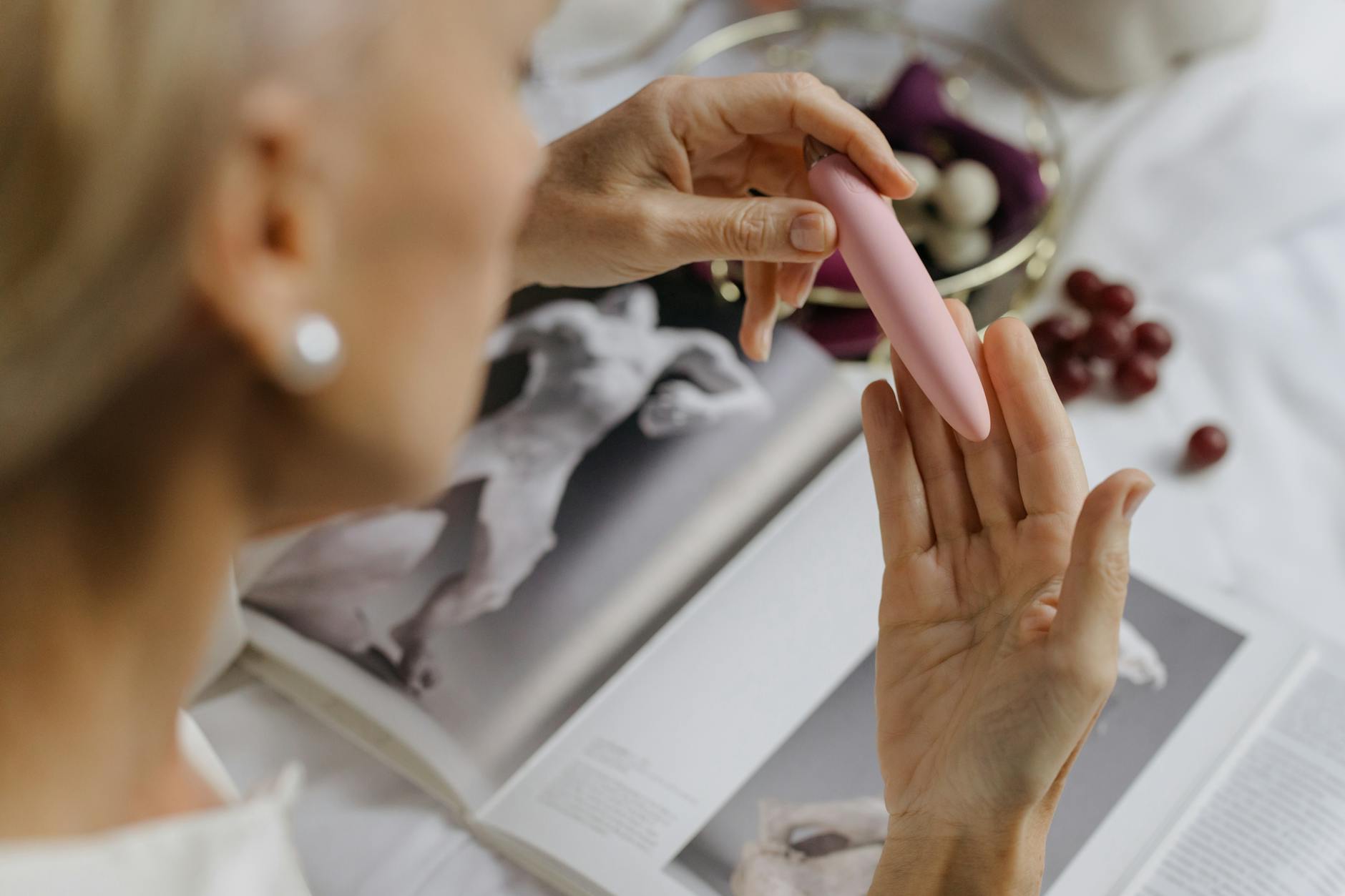
Photo by cottonbro studio on Pexels
When numbness is anxiety, not physiology
This is the piece most articles skip. Sometimes sensation feels absent because your brain is protecting you from the experience. Performance anxiety, pressure to orgasm, worry about your body, relationship stress. All of these activate your sympathetic nervous system even while your body is physically aroused.
You feel numb because part of you is still running a safety protocol. The vibrator can help here too, but differently. Using a tool shifts the mental burden. You're no longer performing. You're receiving. Your partner isn't responsible for your pleasure. The device is. This psychological permission often dissolves the numbness faster than any physical technique.
If anxiety is the root cause, how to use a lemon vibrator when rebuilding after a long illness or surgery covers the nervous system piece more deeply.
The lube factor
Tissue sensitivity changes with hydration. Dry tissue is less responsive. Counterintuitively, using a quality water-based lubricant can increase sensation. It protects tissue, reduces friction pain that your brain interprets as threat, and allows vibrations to travel more efficiently across your skin. If numbness shows up alongside dryness, addressing the dryness often restores sensation immediately.
What to do if numbness persists
If you've tried rhythm variation, pauses, lubricant adjustments, and intensity changes for several weeks and sensation still feels flat, check three things:
Medication review. Antidepressants, blood pressure meds, antihistamines, and birth control all affect arousal and sensation. None of these are reasons to stop the medication. But it's worth a conversation with your provider about alternatives or timing adjustments.
Sleep and stress audit. Genuinely. Sleep deprivation and chronic stress are massive sensation killers. A week of solid sleep can restore response more effectively than any toy.
Relationship check-in. If numbness only happens with a partner and not solo, the issue isn't physiological. It's relational. This is where working with a couples therapist or how to use a lemon vibrator when rebuilding intimacy after relationship conflict becomes useful.
The rhythm of restoration
One more thing: numbness usually doesn't resolve in a single session. Your nervous system needs pattern interruption over time. Think of it like retraining a muscle. Two weeks of consistent novelty, rhythm variation, and pressure changes will shift your baseline sensitivity upward. Three weeks feels noticeably different.
The lemon clitoral vibrator accelerates this because it automates the novelty piece. You're not managing variation manually. The device is doing that work. You're just present and receiving.
People also ask
Why does my clitoral vibrator feel like nothing at first?
Your nerve endings have adapted to whatever stimulation preceded it. If you've been using steady manual pressure, your sensory system has stopped reporting "news" from that input. A vibrator introduces novel signal patterns. But those patterns need to be varied and fresh. Using the same intensity setting repeatedly will flatten sensation again. Vary intensity, change patterns, introduce pauses. Your body responds to novelty, not volume.
Can numbness during sex mean I'm not attracted to my partner?
Sometimes yes, but usually no. Numbness is more commonly anxiety, distraction, fatigue, or nervous system dysregulation than lack of attraction. Attraction lives in anticipation and desire, which can exist while arousal response is muted. If you feel attraction outside the bedroom but numbness during intimacy, the issue is usually activation state, not attraction. This is worth exploring in conversation or with a therapist.
Does using a vibrator too much make sensation worse?
Not if you're varying the stimulus. If you use the same intensity and pattern daily, yes, you'll adapt. But if you rotate intensity levels, change patterns, take breaks between sessions, and introduce partnered variety, your nervous system stays engaged. Think of it like exercise. Same workout daily becomes less effective. Varied stimulus keeps adaptation low.
How long does it take to restore sensation after using a vibrator?
If you take a break from the vibrator, sensation to manual touch usually sharpens within three to five days. Some people feel the shift immediately. If you're using the vibrator as part of varied partnered play, restoration happens faster because you're introducing multiple sensory inputs, not just one. The goal isn't to abandon the vibrator. It's to use it as one tool among many, with variation and rhythm.
Is numb sensation during arousal a sign I need therapy?
Not necessarily. Numbness is usually a nervous system state, not a mental health crisis. That said, if numbness is paired with low desire, difficulty connecting with your partner, or feelings of dissociation during intimacy, talking to a therapist is worth it. They can help you understand whether the issue is physiological, relational, or both.
Can a lemon sucker help with sensation loss better than other vibrators?
Clitoral suction vibrators like the Lemon engage more of your sensory surface at once compared to traditional bullet or wand vibrators. The suction action combined with vibration creates a richer signal input. For sensation numbness specifically, this fuller engagement often resets awareness faster. But the key is variation. Any quality vibrator helps if you're using varied intensities and patterns. The Lemon's versatility makes that variation easier to maintain.
Moving forward
Numbness during arousal feels like a personal failure. It's not. It's your nervous system responding to stress, adaptation, fatigue, or medication changes. A lemon clitoral vibrator works because it reintroduces sensory novelty. Combined with rhythm variation, partnered connection, and basic nervous system care like sleep and hydration, sensation returns.
Your pleasure matters. Restoring it is worth the small effort. Start low, vary your pattern, take breaks, and be patient with your body's relearning curve.
Have questions about how to get started or what might work for your specific situation? Reach out to us.